

blog
Cable Gland Enlargers & Reducers: Fixing Hole Size Mismatches


Last month, a customer contacted us about a stainless steel enclosure with twelve PG16 (M24×1.5) holes already punched into the panel. The problem was that the cable glands they had ordered were PG13.5 (M20×1.5). Replacing or reworking the panel would have delayed the project by two weeks, so we supplied thread adapters instead. By the next morning, installation was back on track.
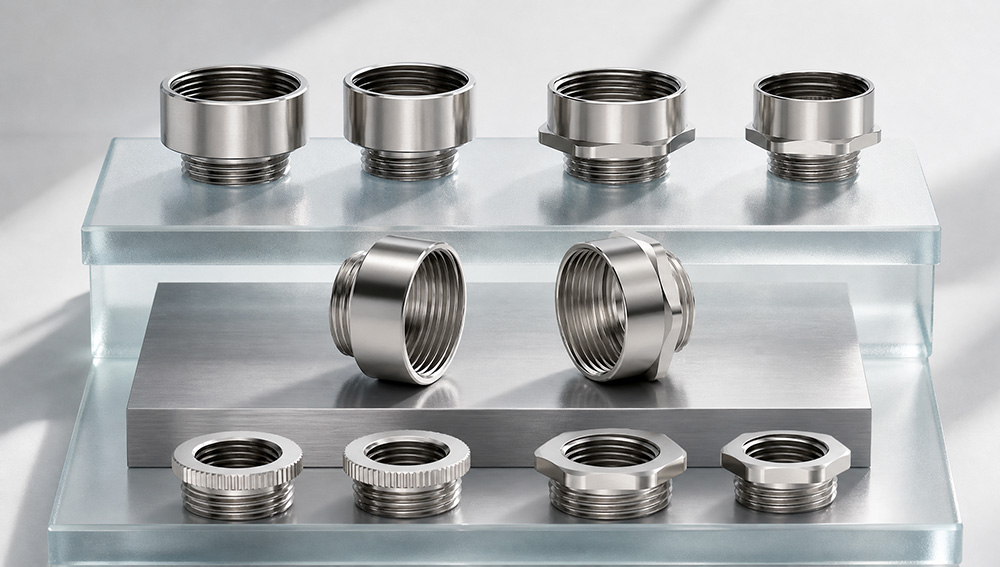
This is exactly where cable gland enlargers and reducers come in handy. They allow glands to fit existing threaded openings without modifying the enclosure. In this article, we’ll look at how they work, when to use them, and what to consider when adding an adapter to a cable gland installation.
Why a Gland and a Hole End Up Mismatched
The mismatch is rarely an installer’s mistake. Most cases trace back to one of four causes, and knowing which one you have usually decides the part.
Panels designed around the older PG standard sometimes carry a gland list later updated to metric, so a hole correct five years ago no longer matches the purchase order.
Sequencing causes the second case, because cable diameter decides gland size and gland size decides the hole, yet the enclosure is often ordered first.
Mixed equipment creates the third, where an NPT knockout sits beside a metric one and the stock room carries a single gland type.
The fourth is wall thickness, since a short entry thread will not reach through a thick wall and a long one will not seal against a thin one.
If you are unsure which thread family you are holding, our guide to NPT, Metric and PG cable gland threads shows how to measure each one.
What an Enlarger Does
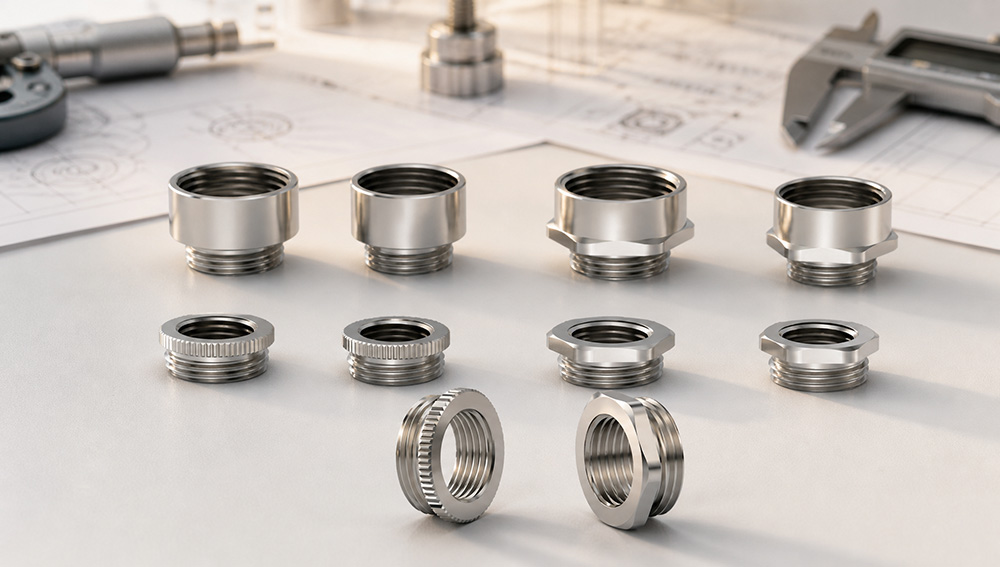
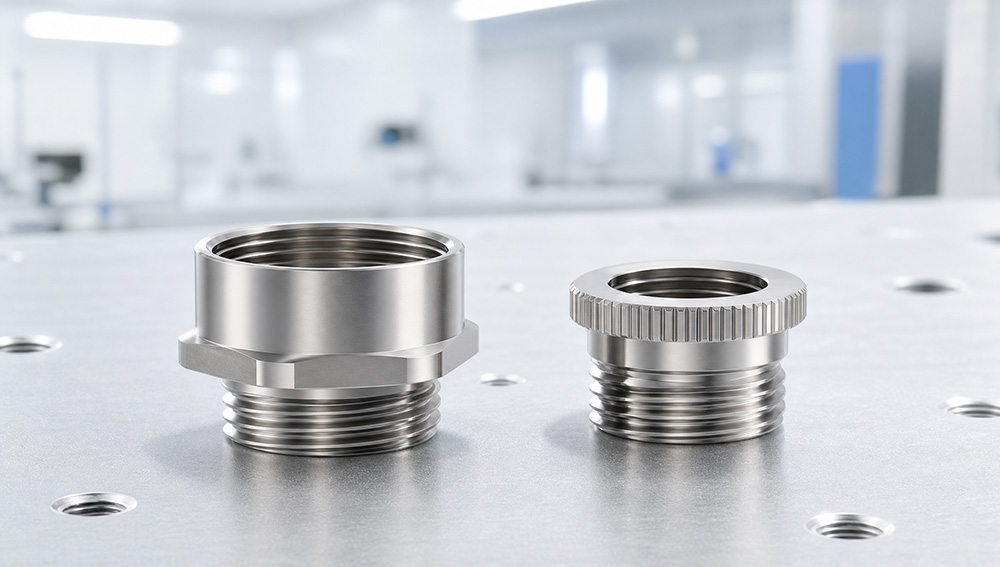
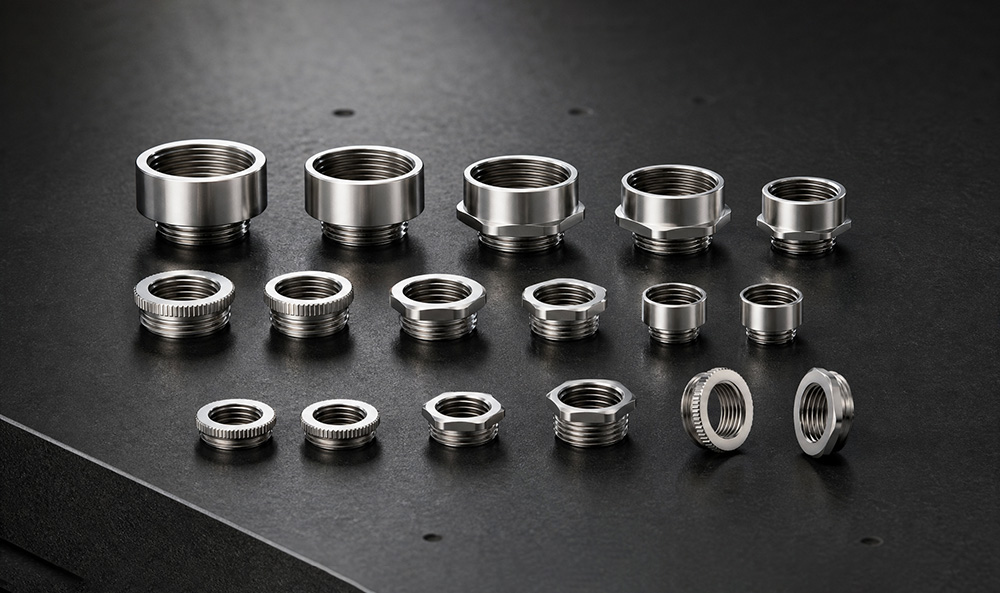
An enlarger steps a thread up. Its inner thread matches the existing hole and its outer thread matches the gland you want, so a PG16 hole takes a PG16 to PG21 enlarger and then accepts a PG21 gland.
Direction is where most ordering errors happen. On our part codes the first number is the inner thread and the second is the outer thread, so HX-REPG16-PG21 fits a PG16 hole and carries a PG21 gland.
What a Reducer Does
A reducer steps a thread down to fit a hole larger than the gland, so an M25 knockout needing an M20 gland takes an M25 to M20 reducer.
Refits produce most reducer orders. A heavier cable with a larger gland gives way to a lighter one and nobody wants to repunch the plate, so plants standardizing on a few hole sizes cover the rest with adapters. Both parts come in nickel plated brass as standard, listed for a static range of -40°C to 100°C with short excursions to 120°C.
The Metric and PG Steps We Hold in Stock
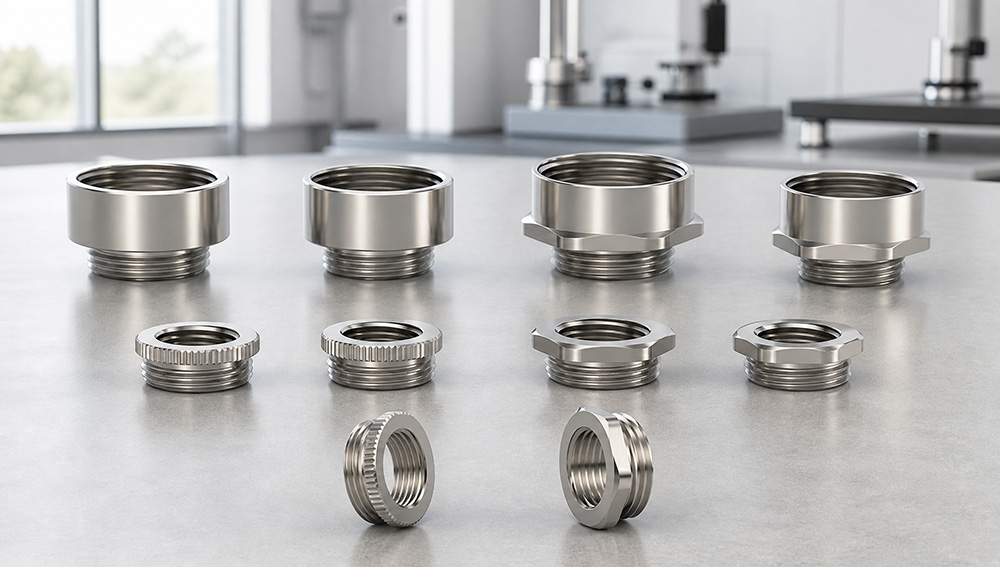
These tables are the actual ranges of our HX-RE series, not a general catalog.
| Metric Step | Thread Length GL (mm) | Joint Length H (mm) | Spanner (mm) | Code |
|---|---|---|---|---|
| M12 to M16 | 5 | 10.5 | 18 | HX-REM12-M16 |
| M16 to M20 | 5 | 10.5 | 22 | HX-REM16-M20 |
| M20 to M25 | 6 | 11.5 | 27 | HX-REM20-M25 |
| M25 to M32 | 7 | 12 | 35 | HX-REM25-M32 |
| M32 to M40 | 7 | 13 | 42 | HX-REM32-M40 |
| M40 to M50 | 8 | 16 | 52 | HX-REM40-M50 |
| PG Step | Thread Length GL (mm) | Joint Length H (mm) | Spanner (mm) | Code |
|---|---|---|---|---|
| PG7 to PG9 | 5 | 10 | 17 | HX-REPG7-PG9 |
| PG9 to PG11 | 6 | 10.5 | 20 | HX-REPG9-PG11 |
| PG11 to PG13.5 | 6 | 12.5 | 22 | HX-REPG11-PG13.5 |
| PG13.5 to PG16 | 6.5 | 11 | 24 | HX-REPG13.5-PG16 |
| PG16 to PG21 | 6.5 | 14.5 | 30 | HX-REPG16-PG21 |
| PG21 to PG29 | 8 | 11 | 39 | HX-REPG21-PG29 |
Run the list in reverse and you have the reducers, supplied as a separate series with longer joint lengths to keep the same spanner access. Drawings sit on the metal enlarger and metal reducer pages.
Choosing Between an Enlarger and a Reducer
| What You Have | What You Need | Part |
|---|---|---|
| Hole smaller than the gland entry | Step up | Enlarger, inner thread first |
| Hole larger than the gland entry | Step down | Reducer, outer thread first |
| Hole size right, thread family wrong | Convert metric to PG or the reverse | Adapter of the same nominal size |
| Wall thicker than the entry thread | Add joint length | Adapter plus a sealing washer |
One caution applies to the third row. A same size conversion such as M20 to PG13.5 is a real part, yet the two threads sit close enough in diameter that ordering the wrong step is easy. Confirm the callout on the drawing rather than the gland label.
What Changes in the Assembly Once You Add an Adapter
Three things shift once an adapter joins the stack.
The protection rating follows the weakest joint. Our HX-RE adapters are listed at IP54, so a gland rated IP68 screwed into one leaves an assembly treated at the lower figure, since the adapter joint is a second sealing interface. Washdown areas need a sealing washer at the adapter face as well.
Earthing gains a joint as well. On brass glands the armor or braid bonds through the gland body, and an adapter keeps that path only while the threads stay clean and tight. Continuity-critical builds therefore take a serrated EMC locknut on the inside face.
Torque belongs to the adapter rather than the gland. Adapter walls are thinner, so the gland’s tightening torque will distort them. Snug the adapter to the enclosure first, then tighten the gland to its own specification, and the parts guide explains what each component contributes.
Installation Notes from the Line
Never stack two adapters to bridge a large step. Two joints cut sealing reliability and raise the stack height enough to foul an enclosure door, which is why we build single size steps and a PG11 to PG21 jump becomes a new hole.
Use the spanner flats rather than a pipe wrench, because the joint lengths above give a full tool grip and a wrench on the round body will ovalize the thread.
Recheck the cable diameter after the step change, since a larger gland entry does not mean the clamp range moved with it. Our size calculation guide covers the measurement method.
FAQ
Four questions come up most often when a plant changes gland sizes mid-project.
Can an enlarger be used outdoors?
Yes, with the right sealing. The brass body and nickel plating handle rain and ultraviolet exposure, and the limit is the IP54 joint rather than the material, so add a sealing washer and keep the joint clear of standing water.
Is a metric to PG adapter the same as a step adapter?
No. A step adapter changes the diameter while a same size conversion keeps it and changes the thread family. Both are stocked under the same code prefix.
Does an adapter change the gland’s temperature rating?
The adapter is listed for the same static range as the gland, -40°C to 100°C with short excursions to 120°C. Continuous operation above 100°C calls for a high temperature gland in the same material.
Can an adapter fit a flexible conduit fitting?
Only where the fitting uses a matching thread. They share the thread families but not always the wall thickness allowance, so send us the fitting callout and we will confirm the pair.
Conclusion
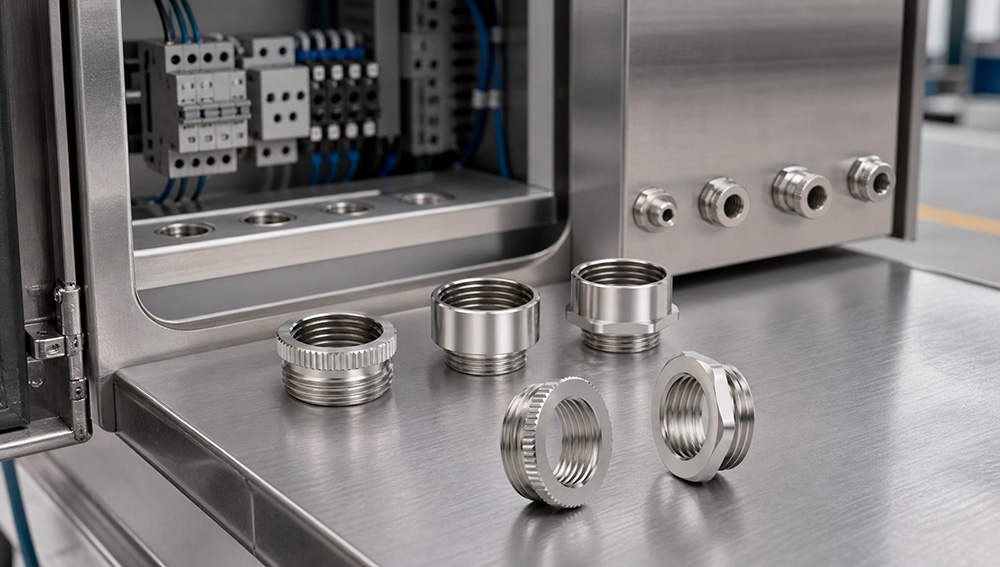
In most cases, a small brass thread adapter is all you need to make a mismatched hole work, without replacing the enclosure or drilling a new opening. The important thing is getting the thread sizes right. Start with the existing hole, then check the thread size of the cable gland you plan to install. This will help you choose the correct enlarger or reducer.
Standard adapters cover most installations, but unusual thread combinations or thicker enclosure walls may need a custom part. If you’re unsure, send us your drawing or measurements. We can check whether a standard adapter will work or whether a custom size makes more sense. Sometimes, modifying the hole is still the better option.
Need help finding the right adapter? Contact our engineers with your existing hole thread, cable gland thread, and enclosure wall thickness. We’ll help you confirm the correct part number.
How Can We Help You?
Our professional team is ready to provide you with prompt and support.

As a trusted cable gland supplier, our connector products serve international markets, including new energy, rail transportation, outdoor lighting, robotics and automation, industrial electrical cable equipment, and computer superservers.
© Copyright 2026 ZHEJIANG HONGXIANG CONNECTOR CO., LTD .