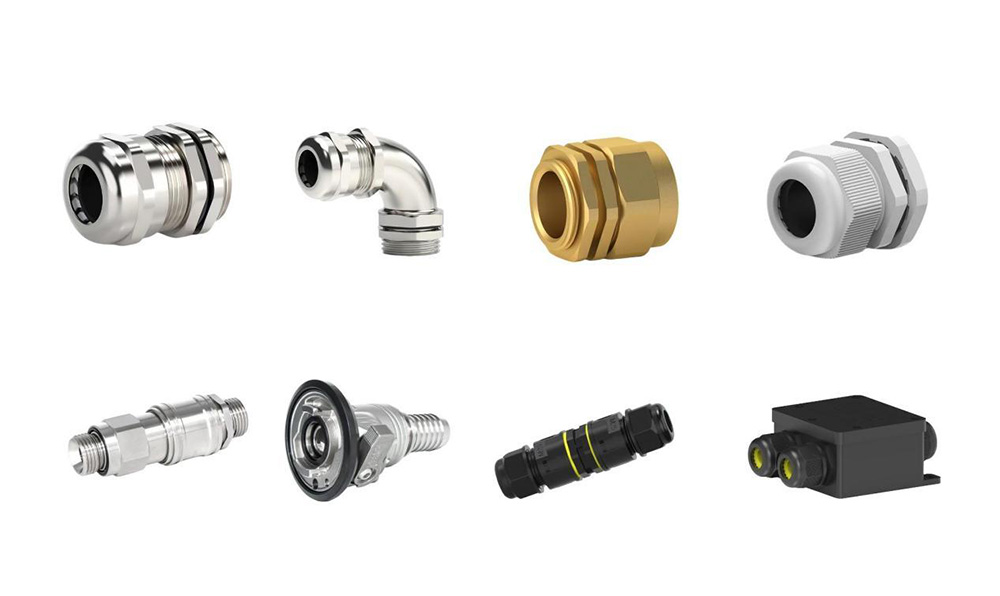




Cable glands are known by many names, including cable connectors, cable fittings, cable accessories, and cable entry devices. Regardless of the terminology, they serve one essential purpose: securing and sealing cables within equipment enclosures. This function is critical for protecting sensitive wiring from contaminants, moisture, and corrosion, especially in harsh operating environments.
Although cable glands feature a relatively simple design, they provide a highly reliable system for cable fixation and protection. Their individual components work together seamlessly to create a secure seal around the cable, helping critical systems maintain stable performance even under challenging environmental conditions such as wind, rain, and moisture exposure.
In the following sections, we will take a closer look at the individual components of cable glands, explaining how each part contributes to building a durable and highly effective cable protection system.
Key Parts of a Cable Gland
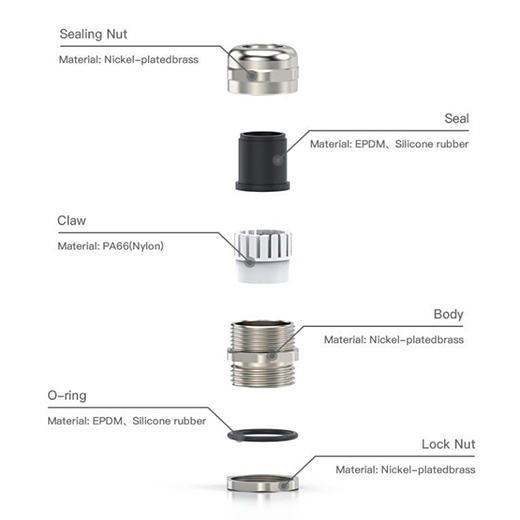
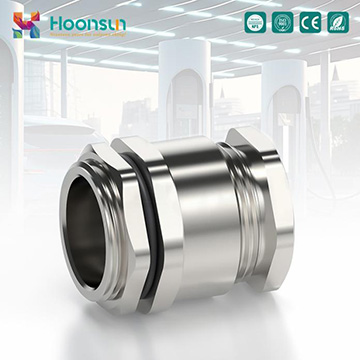
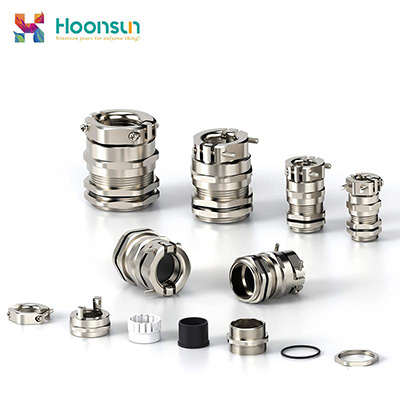
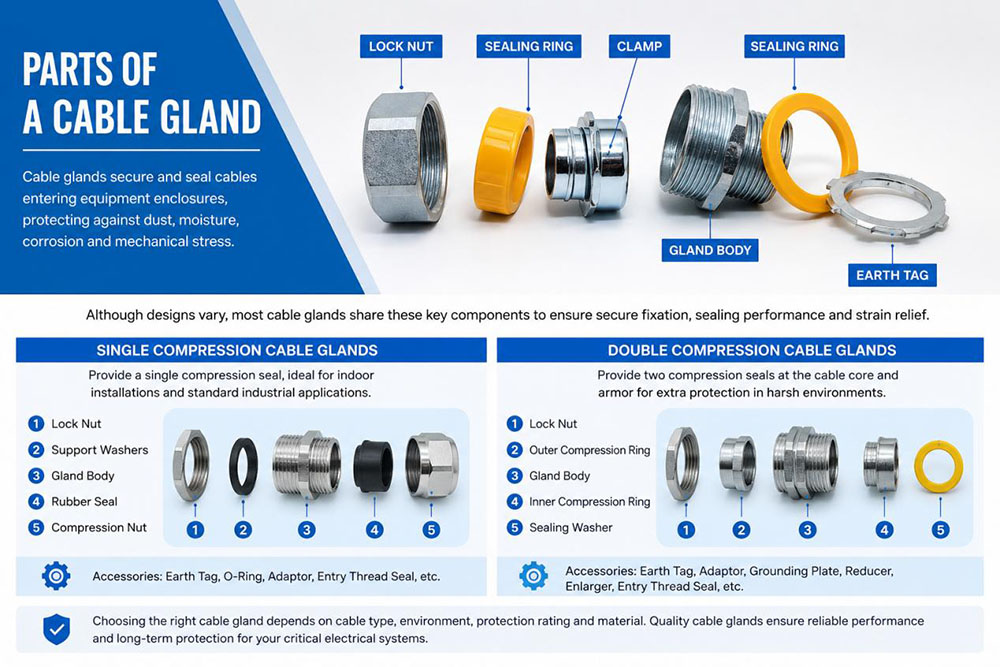
Cable glands are available in different designs to suit various cable types and installation environments. At Hoonsun Cable Gland, common options include metal cable glands, nylon cable glands, armored cable glands, marine cable glands, EMC cable glands, and explosion-proof cable glands. Although the structure may vary slightly depending on the product type, most standard cable glands are built around several key components: