
Request A Quote

Understanding Different Cable Gland Thread Types: NPT, Metric, & PG

Author    |    hongxiang_admin    |    April 29, 2026
facebook sharing button
twitter sharing button
line sharing button
wechat sharing button
linkedin sharing button
pinterest sharing button
whatsapp sharing button
telegram sharing button

Without threads, there would be no fastening screws. But some other components also rely on the special properties of threads to function properly. This is especially true for components that require both a secure connection and the ability to be disassembled, such as cable glands.

Cable glands are an essential component of any electrical installation, and understanding the different thread types used in cable glands is crucial. The three most commonly used thread types in cable glands are NPT threads, metric threads, and PG threads. Understanding the differences between these thread types will help you choose the appropriate cable gland for your needs.

Why Thread Type Matters in Cable Glands?

Cable glands are designed to secure cables while providing protection against environmental factors such as dust, moisture, vibration, and even hazardous substances. The thread serves as the interface between the gland and the equipment enclosure, directly impacting:

  • Sealing performance (IP rating)
  • Mechanical stability
  • Compatibility with equipment
  • Ease of installation and maintenance

An incorrect thread choice can lead to leakage, equipment failure, or costly rework. That’s why understanding thread standards is essential in industrial cable management.

When selecting an industrial cable gland thread type, several crucial considerations come into play. First, assess the cable type, diameter, and material properties. Next, consider the installation environment, including corrosion protection needs, enclosure materials, and ingress protection ratings.

Ensure compatibility with accessories like locknuts and sealing washers. Lastly, choose a suitable cable gland type based on safety requirements and standards. Proper selection ensures reliable connections and compliance with regulations.

What is the working principle of a cable connector?

Although there are various types of cable fittings, their basic function is generally the same. When properly installed, they reliably seal the housing and provide stress relief for the cable. Depending on the application, cable fittings may be made of different materials or equipped with additional seals. All requirements for electrical installation cable fittings can be found in the standard DIN EN 62444.

Where Are Cable Connectors Used?

Electricity has become an essential part of modern life. However, it still cannot be transmitted wirelessly on a practical scale, which means we rely heavily on an extensive network of wires and cables. These cables ultimately terminate in distribution boxes, control panels, or junction enclosures.

This creates a critical challenge: while cables must enter and connect within these enclosures, contaminants such as dust, dirt, and moisture must be kept out. This is where cable glands play a vital role. Installed at the cable entry point, they securely anchor the cable as it passes through the enclosure wall, ensuring a reliable seal while also protecting the cable from mechanical stress and damage.

Cable Gland Thread Type

1) Metric Threads (M)

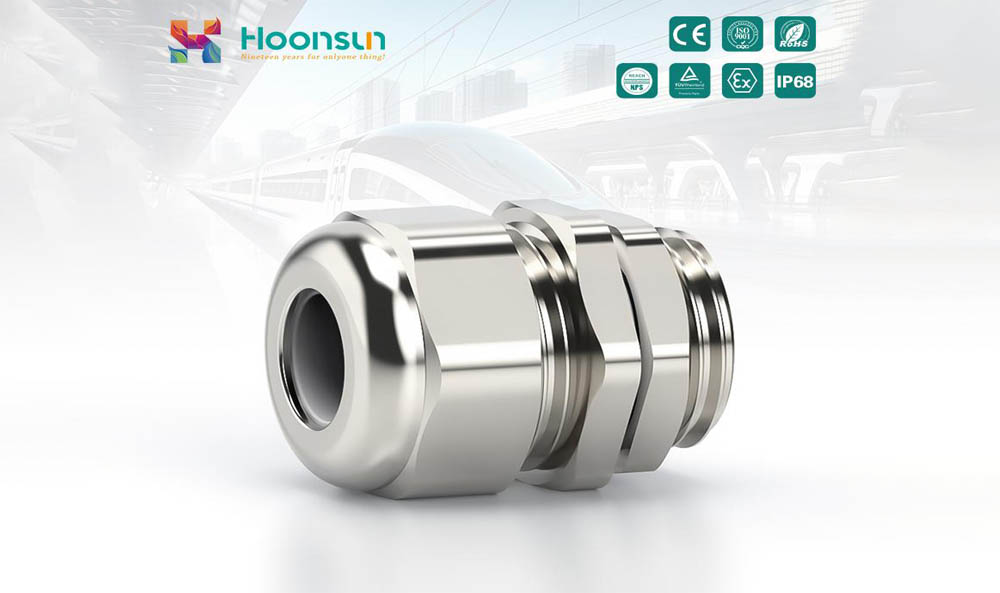
Metric threads are currently the most widely used cable gland thread type worldwide. Defined by ISO standards, they are measured in millimeters and typically designated as M followed by diameter and pitch (e.g., M20 × 1.5).
Metric Threads (M)

Key Features

  • Straight (parallel) thread design
  • 60°thread angle
  • Standardized dimensions for global compatibility
  • Advantages
  • High precision and consistency
  • Widely accepted across international markets
  • Ideal for automated and modern equipment

Typical Applications

Metric threads are commonly used in industrial automation, machinery, electrical panels, and equipment manufactured for global distribution.

Considerations

Since metric threads are not self-sealing, they require additional sealing elements such as O-rings or gaskets to achieve proper ingress protection.

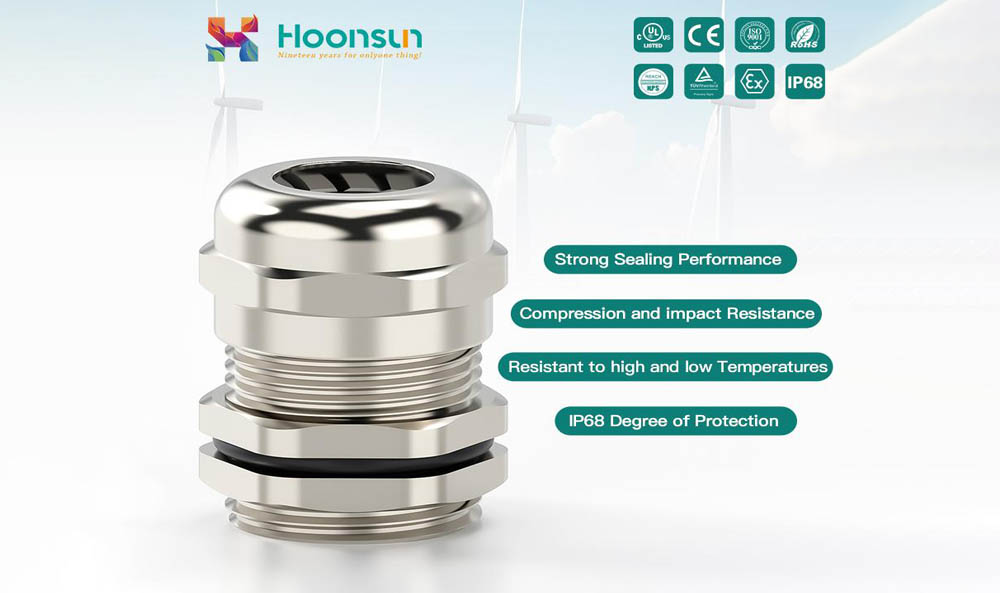
HOONSUN IP 68 Waterproof Metal Cable Gland Direct Type


2) PG Threads

PG (Panzergewinde) threads originated in Germany and were once the dominant standard in European cable management systems. Although gradually being replaced by metric threads, PG threads are still found in many existing installations.

PG Threads

Key Features

  • Straight thread design
  • Approximately 80°thread angle
  • Larger thread profile compared to metric

Advantages

  • Reliable sealing when used with proper accessories
  • Good cable clamping range
  • Suitable for thinner enclosure walls

Typical Applications

PG threads are often used in legacy systems, older industrial equipment, sensors, and certain specialized applications.

Considerations

  • Limited compatibility with newer systems
  • Gradually being phased out in favor of metric standards
  • May require adapters when integrating with modern equipment

M/PG/G/NPT /NG Type Metal Cable Waterproof Cable Gland Of Ip68


3) NPT Threads

NPT (National Pipe Thread) is a U.S. standard commonly used in North America and industries where sealing performance is critical.

Metric Threads (M)

Key Features

  • Tapered thread design
  • Thread sealing achieved through compression
  • Measured in inches

Advantages

  • Self-sealing without additional gaskets
  • Excellent for high-pressure or fluid environments
  • Strong mechanical connection

Typical Applications

NPT threads are widely used in oil & gas, petrochemical, marine, and heavy industrial sectors, particularly in North America.

Considerations

  • Requires careful installation to avoid over-tightening
  • Not directly interchangeable with metric or PG threads
  • Less commonly used outside North America

PG /G/NPT Waterproof IP68 Brass Cable Gland ROHS / UL Certification


Comparison of Metric, PG, and NPT Threads

Feature Metric (M) PG NPT
Measurement Unit Millimeters Legacy standard Inches
Thread Type Straight Straight Tapered
Sealing Method O-ring/Gasket O-ring/Gasket Thread compression
Global Usage Worldwide Declining North America
Compatibility High Limited Regional

How to Choose the Right Cable Gland Thread?

Selecting the correct thread type depends on several practical factors:

1. Equipment Compatibility

Always match the thread type of the cable gland with the threaded entry of your equipment or enclosure.

2. Environmental Conditions

  • For high-pressure or fluid environments: NPT is preferred
  • For general industrial use: Metric is ideal
  • For legacy systems: PG may still be required

3. International Requirements

If your equipment is exported or used globally, metric threads provide the best compatibility.

4. Sealing Requirements

Applications requiring higher ingress protection should consider thread design and sealing accessories carefully.

Sealing Requirements

Conclusion

For modern industrial applications, metric threads offer the optimal balance between compatibility and reliability, while NPT and PG threads continue to play important roles in specialized applications and traditional environments.

Remember, choosing the appropriate thread type ensures reliable cable management and protection. Hoonsun Connector offers cable fittings in metric, PG, and NPT threads. Feel free to contact us for more information or to discuss your specific needs!

How Can We Help You?

Our professional team is ready to provide you with prompt and support.

logo

As a trusted cable gland supplier, our connector products serve international markets, including new energy, rail transportation, outdoor lighting, robotics and automation, industrial electrical cable equipment, and computer superservers.

© Copyright 2026 ZHEJIANG HONGXIANG CONNECTOR CO., LTD .

+86-577-62628623