



In modern electrical systems, small components often play a critical role in long-term performance and safety. Nylon cable glands are one of those essential parts. Designed to secure, seal, and protect cables entering electrical enclosures, they ensure reliable strain relief, environmental protection, and long service life across a wide range of industries.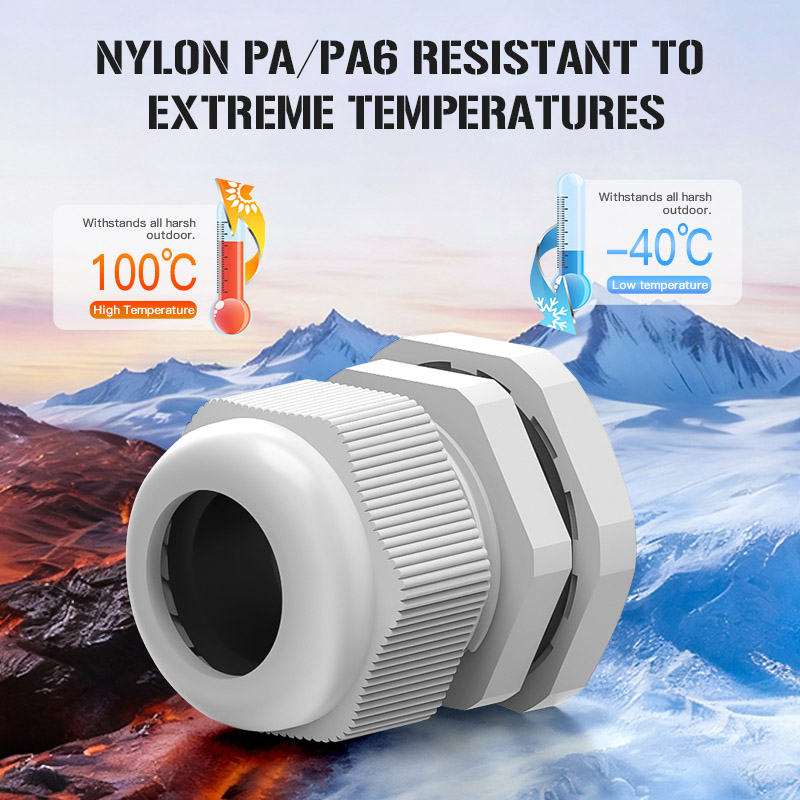
At Zhejiang Hongxiang Connector Co., Ltd., we manufacture high-quality PA66 nylon cable glands engineered for demanding industrial environments. This guide provides a comprehensive overview of their specifications, performance features, application scope, and practical selection tips.
What Is a Nylon Cable Gland?
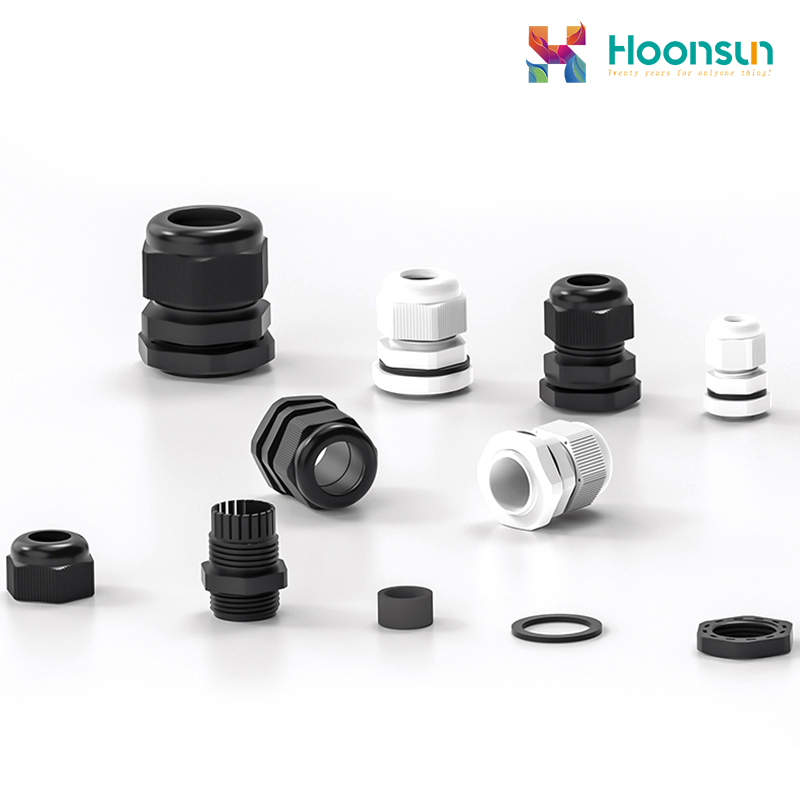
A nylon cable gland is a mechanical cable entry device used to firmly secure non-armored cables while maintaining enclosure protection. It prevents dust, water, vibration, and strain from damaging cables and internal components.
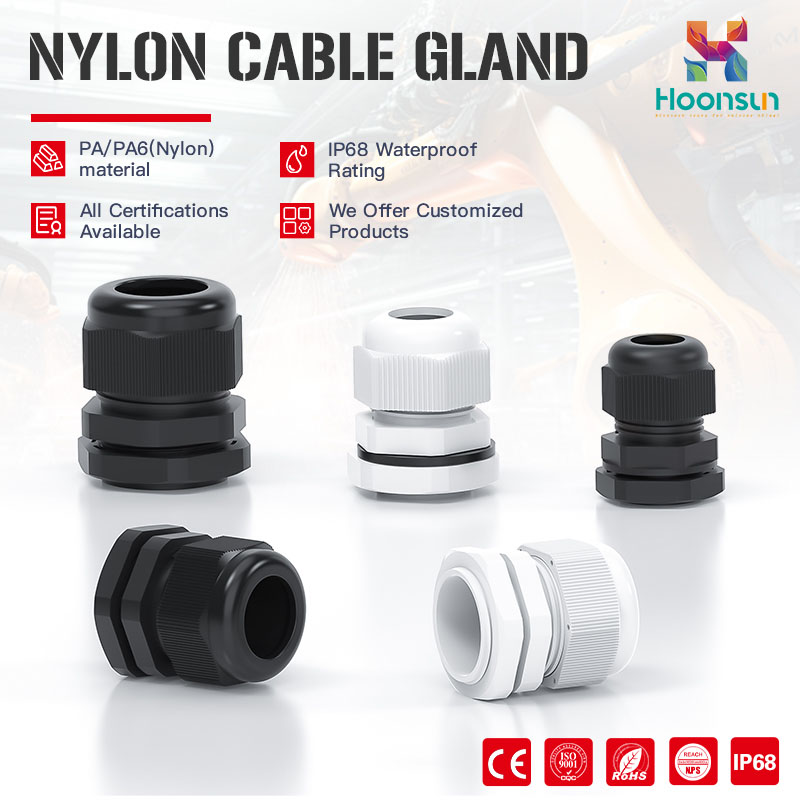 Our cable glands are manufactured using eco-friendly, UL-certified PA66 nylon and are equipped with high-performance sealing components. They are widely used in electrical cabinets, automation systems, lighting installations, power distribution equipment, and new energy applications.
Core Materials and Performance Features
High-Quality PA66 Nylon Construction
The main components, gland body, compression nut, and locknut, are made from durable PA66 nylon. This material offers:
- Excellent mechanical strength
- High electrical insulation
- Corrosion resistance
- Lightweight yet impact-resistant structure
- Non-rusting performance
Flammability rating is UL94 V-2 as standard, with optional V-0 flame-retardant grade available for higher safety requirements.
Advanced Sealing System
The standard sealing material is EPDM, which provides reliable waterproof and aging resistance. Optional materials include:
- NBR – Ideal for oil-resistant environments
- Silicone – Suitable for wide temperature ranges and harsh weather conditions
These options allow flexible adaptation to specific working environments.
Environmental and Mechanical Performance
Our nylon cable glands are designed to operate reliably in both indoor and outdoor environments.
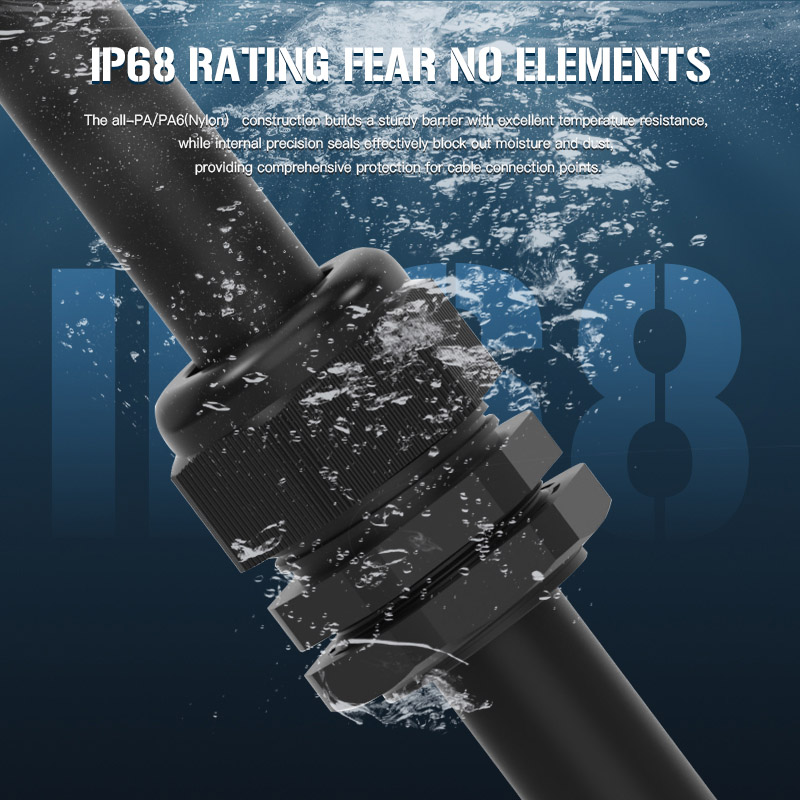
IP68 Waterproof Protection
- Rated IP68 – 10 bar
- Provides long-term waterproof sealing under rated water depth
- Prevents dust ingress in harsh industrial settings
Temperature Range
- Static: -40°C to +100°C (short-term up to 120°C)
- Dynamic: -20°C to +80°C (short-term up to 100°C)
This wide operating range ensures stability in cold climates, outdoor enclosures, and high-temperature workshops.
Mechanical Strength
- Strong tensile resistance
- Effective cable strain relief
- Vibration-resistant structure
- Prevents cable sheath damage
International Certifications and Compliance
Our nylon cable glands meet major international compliance standards, including:
- CE
- RoHS
- REACH
- PAHS
- SGS environmental certification
- EN50262 industrial standard
These certifications ensure suitability for both domestic and international projects.
Complete Thread Standards Coverage
We offer full compatibility with global thread systems, eliminating the need for adapters and maintaining protection ratings.
- Metric Threads (M Series): M8×1.25 to M63×1.5
- PG Threads (German Standard): PG7 to PG48
- G / BSP / PF Threads (British Standard): G1/8″ to G2″
- NPT Threads (American Standard): NPT1/8″ to NPT2″
This comprehensive coverage ensures seamless integration with global equipment enclosures.
Common Sizes and Typical Applications
Below are some commonly used models:
- M8 / M12: Small sensors and signal cables
- M16 / M20: Standard control cabinets and power wiring
- M25 / M32: Medium to heavy-duty distribution boxes
- PG7 / PG9: European equipment and lighting systems
- PG13.5 / PG16: Automation and industrial control cabinets
- PG21: Heavy cables and large enclosures
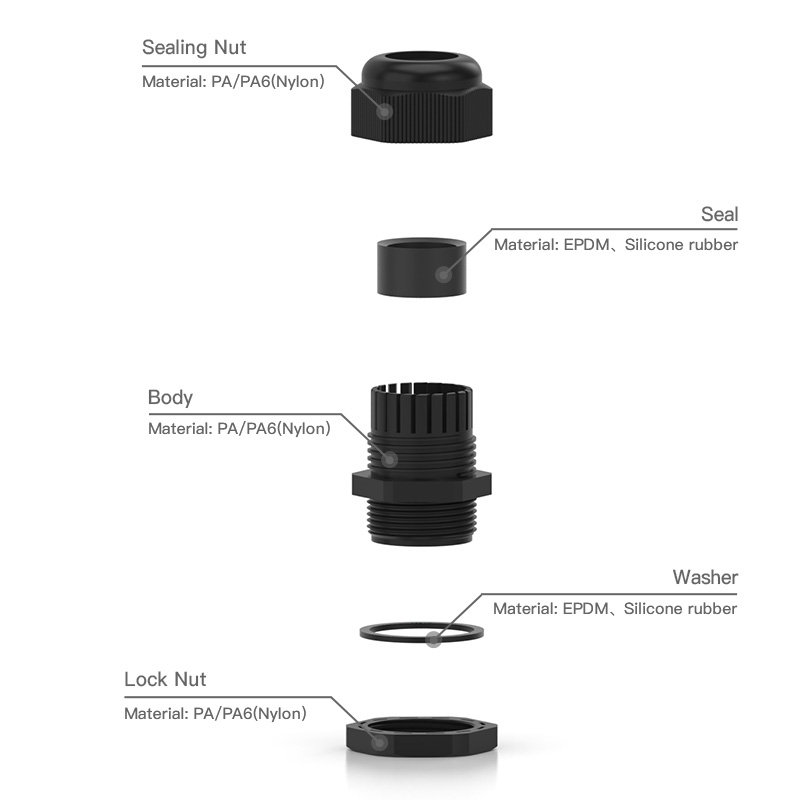
Each gland is supplied as a standard 5-piece set:
- Gland body
- Locknut
- Sealing washer
- Clamping claw
- Compression nut
Optional bend-resistant spiral neck versions are available to enhance cable bending protection and extend cable lifespan.
Common Models, Dimensions & Compatible Cable Diameters
| Thread Specification | Suitable Cable O.D. (mm) | Thread Length (mm) | Recommended Wrench Size (mm) | Typical Application |
| M8×1.25 | 2–5 | 8.0 | 14 | Small sensors, thin wire harnesses |
| M12×1.5 | 3–5, 4–8 | 8.5 | 18/19 | Control signal cables, small equipment |
| M16×1.5 | 5–10, 6–12 | 10.0 | 22 | Standard wiring in control cabinets |
| M20×1.5 | 6–12, 8–14 | 10.0 | 27 | General power cables, lighting equipment |
| M25×1.5 | 10–14, 13–18 | 11.0 | 32 | Medium-heavy cables, distribution boxes |
| M32×1.5 | 15–23 | 12.0 | 36 | Main power cables for high-power equipment |
| PG7 | 3–6.5 | 8.0 | 19 | European-standard equipment, small electric controls |
| PG9 | 4–8 | 8.5 | 22 | General industrial controls, luminaires |
| PG11 | 5–10 | 9.0 | 24 | Signal cables for automation equipment |
| PG13.5 | 6–12 | 10.0 | 27 | Mainstream size for European-standard cabinets |
| PG16 | 10–14 | 10.0 | 30 | Power cables, outdoor equipment |
| PG21 | 13–18 | 11.0 | 36 | Heavy-duty cables, large enclosures |
Industrial Applications of Nylon Cable Glands
1. Industrial Automation & Control
Used in PLC cabinets, servo systems, sensors, inverters, HMIs, and robotic systems. They ensure organized wiring and reliable sealing inside control panels.
2. Power Distribution Equipment
Suitable for low-voltage distribution boxes, metering cabinets, switchgear, photovoltaic combiner boxes, and energy storage cabinets.
3. Lighting & Municipal Engineering
Commonly applied in street lighting, floodlights, tunnel lighting, landscape lighting, traffic signal systems, and surveillance equipment exposed to outdoor environments.
4. New Energy Systems
Used in PV inverters, EV charging stations, energy storage converters, and outdoor charging piles. Their UV resistance and waterproof design make them ideal for renewable energy installations.
5. Machinery Manufacturing
Applied in packaging machines, textile equipment, conveyor systems, pumps, fans, and compressors where vibration resistance is required.
6. Rail Transit & Engineering Vehicles
Installed in subway auxiliary cabinets, construction vehicles, and specialized machinery exposed to constant movement and vibration.
7. Marine and Offshore Applications
Used in shipboard electrical cabinets and offshore platform enclosures due to salt-spray resistance and corrosion protection.
8. Telecommunications & Electronics
Widely used in telecom cabinets, base stations, and outdoor weak-current systems where weather resistance is critical.