

blog
High Temperature Metal Cable Glands: NGS Series for Applications Above 200°C


When cable entries are installed near motors, heated enclosures, or industrial equipment operating at elevated temperatures, the cable gland must maintain reliable sealing performance under continuous heat exposure.
The HX NGS high temperature cable gland is designed for applications where temperature resistance and environmental protection are important considerations. The gland features a nickel plated brass body, EPDM or silicone sealing components, an EPDM or silicone O ring, and IP68 protection rated at 10 bar. Its stated static operating temperature range is from −60°C to 250°C.
For applications requiring operation above 200°C, reviewing the specified temperature range and material selection is an essential step in confirming whether the cable gland meets the requirements of the installation.
What Makes a Cable Gland High-Temperature Rated?
A metal body alone does not make a cable gland suitable for heat. In most real installations, the first weak point is the sealing system. When temperatures climb, elastomer parts can lose elasticity, harden, deform, or stop holding the same compression against the cable and the enclosure wall. Once that happens, the gland may still look intact from the outside, but its sealing performance can drop fast.
That is why high-temperature selection starts with materials. The body has to keep its shape and thread integrity, and the sealing components have to stay functional at the temperatures your equipment actually sees. For engineers and buyers, that means the temperature limit of a cable gland is often set by the seal package as much as by the metal housing.
Meet the NGS Type: Built for Heat
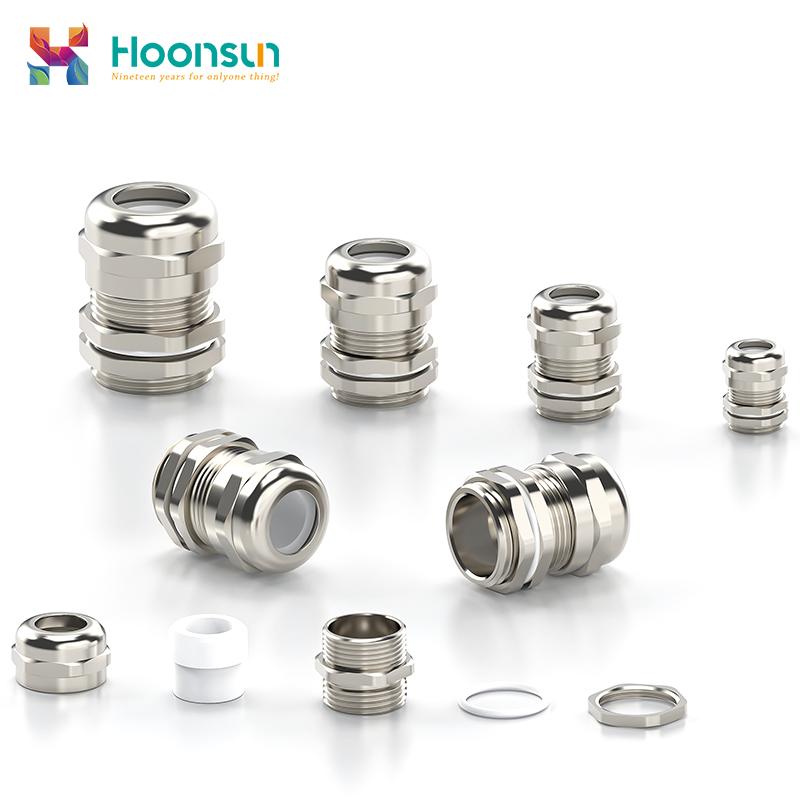
The HX-NGS type is a metal cable gland designed for thermal and environmental stress. The body is nickel-plated brass, which gives you the mechanical strength of brass with added corrosion resistance from the plated surface. The sealing components can be EPDM or silicone rubber, and the O-ring can also be EPDM or silicone rubber.
The published protection degree is IP68-10 bar, and the published temperature range is static −60°C to 250°C. The product page also lists high tensile strength, resistance to oil, acids, alkalis, and salts, and corrosion resistance from the nickel-plated finish. That combination matters because heat is rarely the only problem at the cable entry point.
The HX-NGS type can also be customized in M, G, PG, and NPT thread forms, which helps when your enclosure standard is already fixed by a drawing, a regional standard, or legacy equipment.
Understanding the −60°C to 250°C Temperature Rating
The HX NGS cable gland is specified with a static operating temperature range of −60°C to 250°C. While the low temperature rating is important for outdoor and cold environment installations, the upper limit is the key consideration for high temperature applications.
A maximum rated temperature of 250°C means the gland can be considered for applications operating above 200°C, including environments around 210°C, 220°C, or 230°C, provided the installation remains within the specified static operating conditions.
The term “static” is an important part of the specification. This temperature rating applies to fixed cable installations where the cable and gland remain stationary. Applications involving continuous cable movement, repeated bending, or mechanical flexing at elevated temperatures require additional evaluation based on the complete operating conditions.
In industrial environments, the temperature around the cable gland may not match the ambient temperature of the facility. Heat transfer from nearby equipment, radiant heat sources, and enclosed spaces can affect the actual temperature at the cable entry point. For this reason, selecting the correct gland requires considering the installation location itself, not only the general operating environment.
High Temperature Cable Gland Materials: Brass, EPDM, and Silicone Explained
The first material choice is the body. Nickel-plated brass is a common industrial answer because it balances strength, machinability, and corrosion resistance. In a hot area, the gland still has to maintain thread engagement, hold the cable securely, and resist attack from the surrounding environment. The NGS type also lists resistance to oil, acids, alkalis, and salts, which is important in plants where heat and chemical exposure show up together.
The second choice is the sealing material. With the HX-NGS type, both the sealing components and the O-ring are available in EPDM or silicone rubber. That matters because different projects often arrive with different material preferences already built into their specification packages. If high heat is the main concern, silicone is often the seal material engineers look at first. If your existing standard calls for EPDM, the published configuration also supports that route.
The main selection lesson is simple. When you are buying a high temperature cable gland for above 200°C service, the body material gets attention first, but the seal material decides whether the entry point stays sealed.
Sealing Performance Beyond Heat: IP68
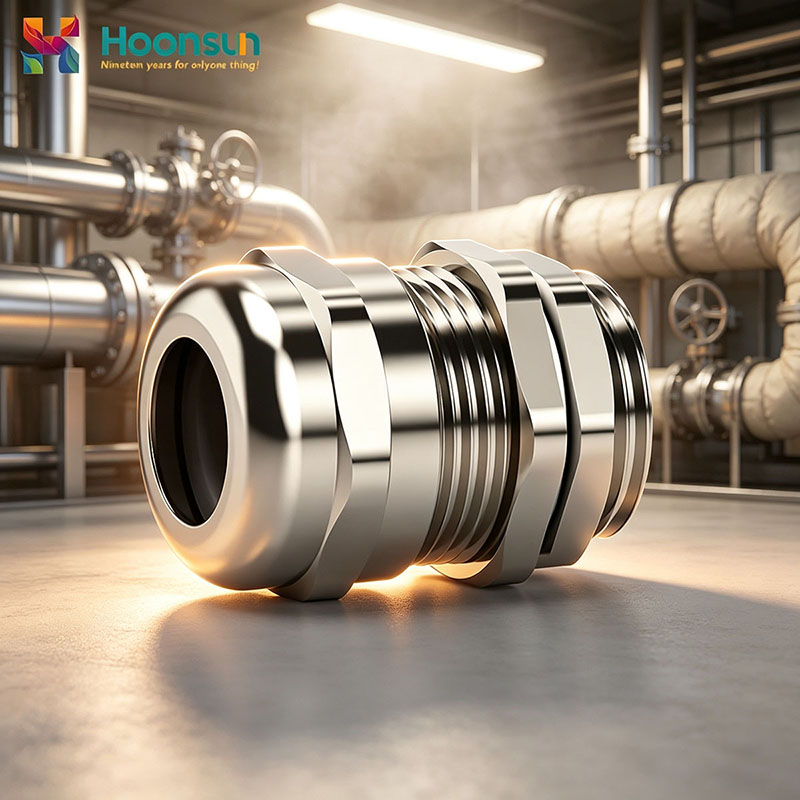
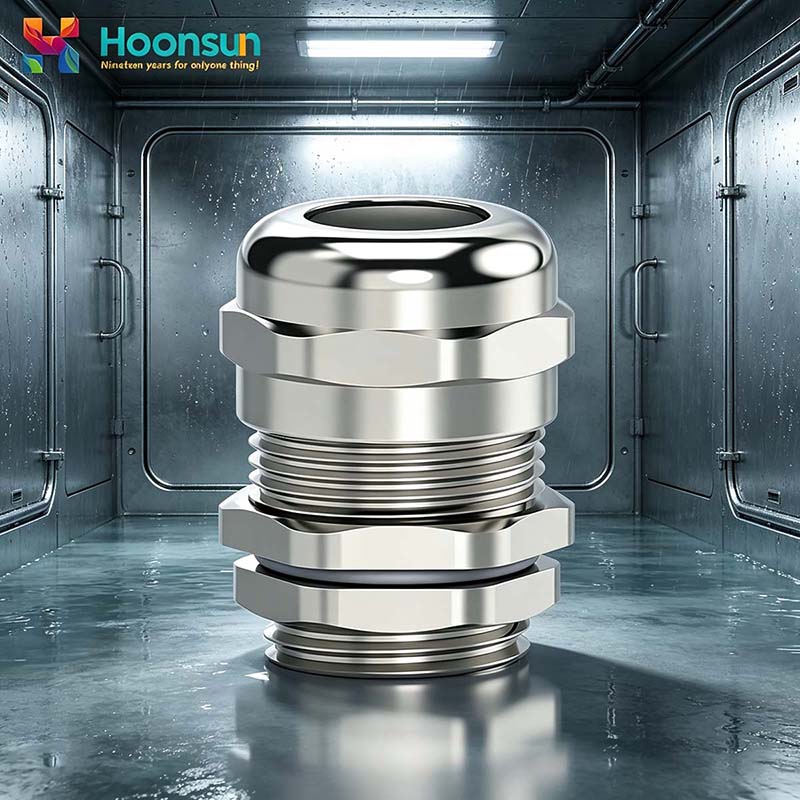
Heat resistance by itself is not enough. Many high-temperature installations also deal with dust, water spray, outdoor exposure, condensation, or general contamination. The HX-NGS type is published as IP68-10 bar, which means the gland is positioned for both full dust protection and water ingress resistance at a defined pressure level.
That is an important pairing. Heat can reduce sealing margin over time if the wrong materials are used. Dust and water then test whatever sealing force remains. A gland with both a high static temperature range and IP68 protection is easier to justify in real industrial service because it addresses more than one failure mode at once.
For a cable entry point near hot equipment, this is often the practical requirement: the gland must handle temperature, but it also must keep the enclosure boundary closed.
Sizing and Thread Options
HX-NGS range covers common M and PG sizes, and the G and NPT threads can be customized. In practice, sizing comes down to two checks: the cable outer diameter and the mounting thread required by the equipment.
M Series
| Thread | Cable O.D. Range | Code |
| M12×1.5 | 4-6.5 mm | HX-NG.M12S |
| M12×1.5 | 5-8 mm | HX-NG.M12S-8 |
| M14×1.5 | 5-8 mm | HX-NG.M14S |
| M16×1.5 | 6-9 mm | HX-NG.M16S |
| M18×1.5 | 8-12 mm | HX-NG.M18S |
| M20×1.5 | 8-12 mm | HX-NG.M20S |
PG Series
| Thread | Cable O.D. Range | Code |
| PG7 | 4-6.5 mm | HX-NG.PG7S |
| PG9 | 5-8 mm | HX-NG.PG9S |
| PG11 | 6-9 mm | HX-NG.PG11S |
| PG13.5 | 8-12 mm | HX-NG.PG13.5S |
Start with the cable outer diameter, then confirm the thread standard on the panel or enclosure. A gland that matches the hole but not the cable range can create a weak seal. A gland that matches the cable but not the thread is no better. On retrofit jobs, the customizable M, G, PG, and NPT options can save time because you do not have to redesign the entry point just to fit the gland.
Applications That Push Past 200°C
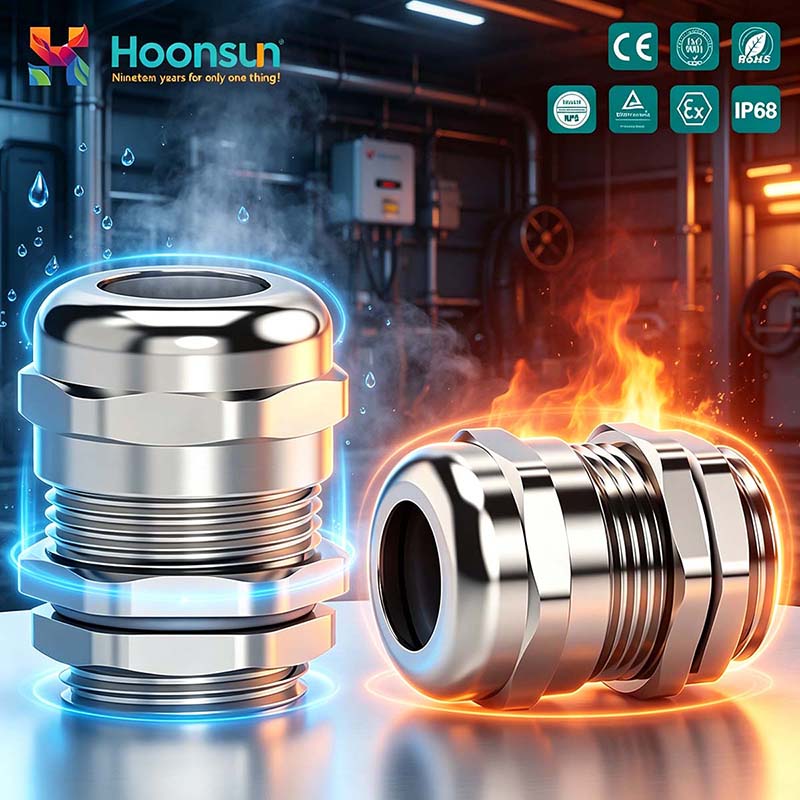
Applications range from high-temperature industrial environments, motors and transformers, LED lighting and control panels, and railway and marine systems to wind and solar energy equipment, as well as cable routing in automation and robotics. These applications make sense, as high temperatures in such environments are often accompanied by conditions such as vibration, moisture, contaminants, or prolonged continuous operation.
Motors and transformers are obvious examples, as cable termination points may be situated near high-temperature housings for extended periods. LED lighting and control panels can also generate localized hot spots. Railway and marine systems impose even more stringent requirements: beyond temperature resistance, environmental sealing and corrosion resistance are equally critical.
Applications such as wind and solar energy equipment, along with cable routing for automation and robotics, further demonstrate that the product is not limited to locations exposed to extreme heat, such as near furnaces. In many energy and automation systems, cable connectors must withstand high temperatures while also resisting harsh weather, dust, oil, or chemical corrosion.
For more information on this topic, see our related article:
Certification and Quality Assurance
From a compliance perspective, the HX-NGS high temperature cable gland is designed to meet international market requirements. The product specifications list certifications including CE, RoHS, REACH, and UL, providing important documentation support for engineering reviews, supplier qualification, and project approval processes.
Supplier experience is another factor worth considering when selecting cable protection components. Hoonsun Cable Gland has been manufacturing cable gland products since 2006, with capabilities covering metal cable glands, nylon cable glands, waterproof cable glands, and related accessories for industrial applications.
For products that rely on precise machining, reliable sealing components, and consistent material performance, a manufacturer’s production experience and quality control approach are important parts of the evaluation process.
FAQs
If you want a fast quotation, send four things first: thread type, cable outer diameter, expected service temperature at the gland location, and your preferred sealing material if your specification already calls for EPDM or silicone.
Conclusion
For applications requiring a metal cable gland above 200°C, the HX NGS series provides clearly defined specifications for evaluation, including nickel plated brass construction, EPDM or silicone sealing options, IP68 protection at 10 bar, chemical resistance characteristics, and a static operating temperature range up to 250°C.
Selecting the right cable gland starts with matching the product specifications to the actual installation conditions. Key factors such as thread type, cable diameter, operating temperature, and environmental exposure should all be considered before choosing a model.
To review available sizes or request a quotation, contact our team through the product inquiry page and provide your thread standard, cable diameter, and required operating temperature. This information helps ensure the recommended gland configuration matches your application requirements.
How Can We Help You?
Our professional team is ready to provide you with prompt and support.

As a trusted cable gland supplier, our connector products serve international markets, including new energy, rail transportation, outdoor lighting, robotics and automation, industrial electrical cable equipment, and computer superservers.
© Copyright 2026 ZHEJIANG HONGXIANG CONNECTOR CO., LTD .