

blog
Multi-Hole Tin-Plated Brass Cable Glands (IP68) for Industrial Electrical Systems


In industrial electrical systems, cable entry points are often the weakest link in long-term reliability. When multiple cables must pass through a single enclosure wall, engineers frequently face challenges such as excessive panel drilling, compromised sealing integrity, poor cable organization, and difficult maintenance access.
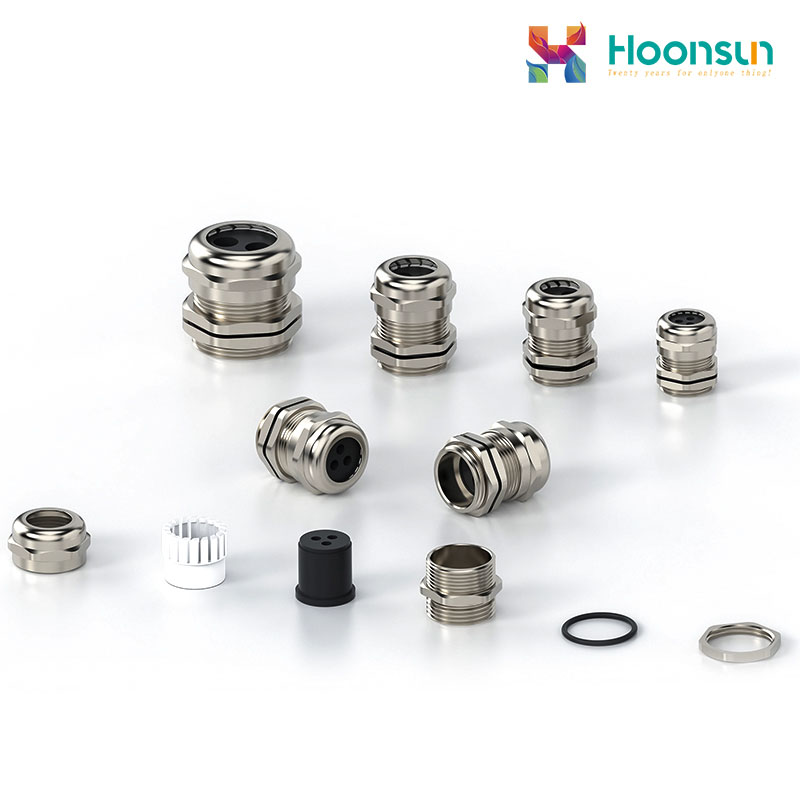
With over a decade of experience in industrial connector manufacturing, Zhejiang Hongxiang Connector Co., Ltd. developed a dedicated series of multi-hole tin-plated brass cable glands to address these real-world installation challenges. This product line is engineered specifically for centralized multi-cable entry applications where protection, durability, and maintainability are equally critical.
Engineered for Centralized Cable Entry Efficiency
Unlike traditional single-hole cable glands, this integrated solution allows between two and eight cables to be securely routed through one reinforced gland body. This significantly reduces the number of enclosure openings, improving structural integrity and maintaining higher overall protection ratings.
Each cable channel is designed as an independent sealing unit. In practical applications, this means that servicing one cable does not compromise the sealing performance of adjacent channels, an important factor in industrial control cabinets, photovoltaic systems, and transportation equipment where uptime is critical.
By reducing redundant drilling and minimizing potential leakage points, the design improves both mechanical stability and long-term enclosure reliability.
Material Selection Based on Industrial Durability Requirements
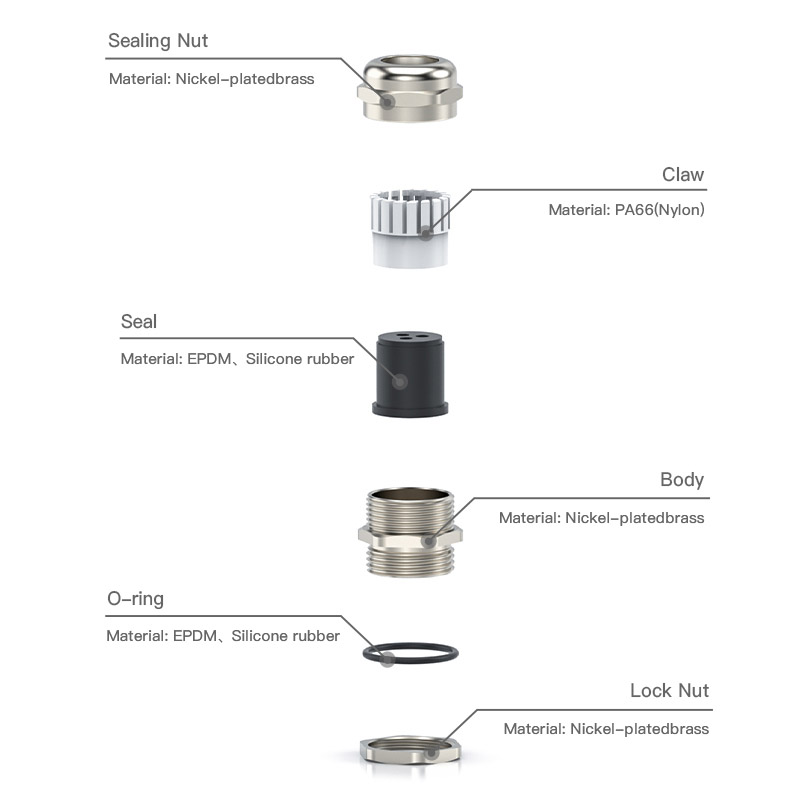
Material performance plays a decisive role in harsh industrial environments. For this reason, the gland body, locknut, compression nut, and internal partition core are manufactured from high-grade brass with an industrial-standard tin-plated surface treatment.
Tin plating serves two critical purposes:
- It enhances corrosion resistance in humid, coastal, or salt-spray environments.
- It prevents surface oxidation that can affect long-term conductivity and mechanical integrity.
Compared to untreated brass or nylon alternatives, tin-plated brass provides superior structural strength, impact resistance, and dimensional stability under vibration conditions.
Sealing components are manufactured from EPDM rubber as standard, chosen for its elasticity, weather resistance, and long-term sealing reliability. For oil-exposed environments such as machinery or hydraulic systems, NBR sealing material is available. In applications involving extreme temperature fluctuations, silicone rubber options provide extended thermal stability.
Verified Protection and Environmental Performance
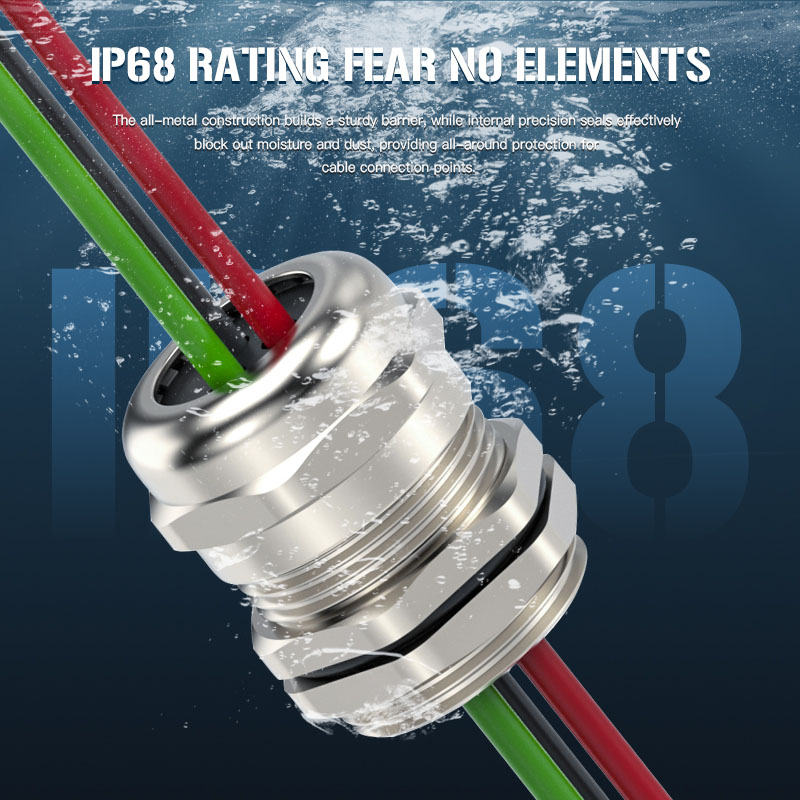
When properly installed, the product achieves an IP68 protection rating under 10-bar pressure testing conditions. This ensures reliable waterproof and dustproof performance for outdoor installations, photovoltaic equipment, marine electrical cabinets, and other exposed environments.
The operational temperature range supports static applications from -40°C to +100°C, with short-term tolerance up to 120°C. Under dynamic vibration conditions, the product maintains stable performance between -20°C and +80°C.

Mechanical testing confirms strong tensile resistance and vibration stability, ensuring that cable strain does not transfer stress to internal electrical terminals. This strain relief capability is particularly important in automation systems, rail transit equipment, and heavy machinery installations.
The product complies with international regulatory standards, including CE, RoHS, REACH, PAHS, and EN50262, supporting use in global industrial markets.
Model Specifications and Configuration Options
The multi-hole series supports 2, 3, 4, 6, and 8 cable configurations, covering applications from signal wiring bundles to mixed power and control cable assemblies.
 It is compatible with major international thread standards, including Metric (M), PG, BSP/G, and NPT threads, ensuring direct integration with globally manufactured enclosures.
Core Parameter Comparison Table of Mainstream Models
| Series Model | Adaptable Thread | Number of Holes | Single-hole Adaptable Cable Outer Diameter (mm) | Recommended Installation Wrench Size (mm) | Core Adaptable Cable Harness Type |
| HX-NPM20 | M20×1.5 | 2/3/4 | 1.2–3.0 | 27 | Sensor cables, weak current control cables, small signal cable harnesses |
| HX-NPM25 | M25×1.5 | 4/6 | 2.0–4.0 | 32 | Multi-signal cables in control cabinets, instrument cables, light control cable harnesses |
| HX-NPM32 | M32×1.5 | 6/8 | 3.0–6.0 | 36 | Industrial control cabinets, lighting power boxes, small and medium mixed cable harnesses |
| HX-NPM40 | M40×1.5 | 6/8 | 4.0–8.0 | 46 | Outdoor equipment, multi-cable power and control composite cable harnesses |
Real-World Application Scenarios
Multi-hole tin-plated brass cable glands are widely applied in industrial automation systems where centralized signal routing improves cabinet organization and reduces installation time.
 In renewable energy installations such as photovoltaic inverters and EV charging stations, their waterproof and corrosion-resistant properties support long-term outdoor exposure. Rail transit systems and heavy machinery benefit from their vibration-resistant construction, while telecommunications cabinets rely on their sealing reliability in outdoor environments.
In marine and offshore (non-explosive) installations, the tin-plated brass body provides enhanced salt-spray resistance compared to standard materials, extending service life in challenging climates.
Defined Usage Boundaries for Safety and Compliance
To maintain safety and performance integrity, this product is not recommended for:
- High-voltage armored cable installations
- Explosion-proof hazardous areas requiring Ex certification
- Long-term exposure to strong acids or strong alkalis
- Continuous operation above 120°C
Clearly defining these boundaries ensures correct product selection and reinforces system safety.
Professional Selection Recommendations
For optimal sealing performance, engineers should select a cable diameter that falls near the midpoint of the specified clamping range. Oversized or undersized cable selection may reduce sealing effectiveness.
Thread specifications should always match the original enclosure opening to maintain IP protection level. The use of adapters is discouraged unless specifically required by design.

In installations combining power and signal cables, separating cable groups into designated channels can reduce electromagnetic interference and improve overall system stability.
Hoonsun Cable Gland: Commitment to Quality and Industrial Reliability
At Zhejiang Hongxiang Connector Co., Ltd., manufacturing processes are built around industrial durability standards and consistent quality control. Each product series is developed based on application-driven design principles, ensuring that installation efficiency, mechanical strength, and environmental protection are fully balanced.
The multi-hole tin-plated brass cable gland series reflects this commitment, providing a reliable, maintenance-friendly solution for modern industrial cable management challenges.
FAQs
Q1: What is a multi-hole tin-plated brass cable gland used for?
A: It’s used to route multiple cables through a single enclosure opening while providing cable retention, strain relief, and environmental sealing, helping reduce drilling points and keep wiring organized in industrial panels.
Q2: What does IP68 (10 bar) mean for these cable glands?
A: IP68 indicates dust-tight protection and long-term water resistance when properly installed. The “10 bar” rating refers to tested pressure conditions, supporting reliable sealing in demanding industrial and outdoor environments.
Q3: How many cables can one multi-hole cable gland support?
A: This product series typically supports 2 to 8 cable channels in one gland, depending on the model and configuration.
Q4: Which thread standards are available?
A: Common options include Metric (M), PG, BSP/G, and NPT threads, allowing direct matching to enclosure openings without adapters in most cases.
Q5: What cable types are compatible with multi-hole brass cable glands?
A: They’re designed for round, non-armored, low-voltage cables such as control, signal, and light power cables with common sheath materials (PVC, rubber, PU, PE).
Q6: When should I choose NBR or silicone seals instead of EPDM?
A: EPDM is a solid general-purpose choice for weather resistance. Choose NBR for oil-exposed environments and silicone for extreme temperature conditions.
Q7: What are common applications for multi-hole tin-plated brass cable glands?
A: They’re widely used in industrial automation cabinets, power distribution boxes, PV/energy storage systems, EV charging-related enclosures, rail transit equipment, telecom cabinets, and marine (non-hazardous) electrical enclosures.
How Can We Help You?
Our professional team is ready to provide you with prompt and support.

As a trusted cable gland supplier, our connector products serve international markets, including new energy, rail transportation, outdoor lighting, robotics and automation, industrial electrical cable equipment, and computer superservers.
© Copyright 2026 ZHEJIANG HONGXIANG CONNECTOR CO., LTD .