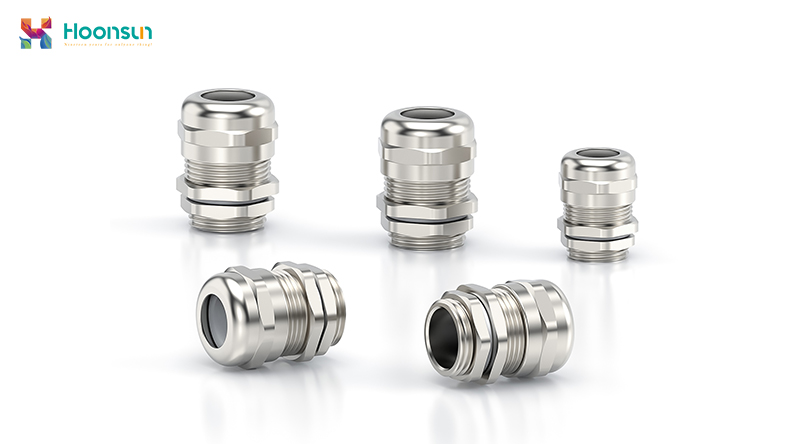
What Is The Function Of A Cable Gland?
These robust sealing and termination devices find extensive use in various applications, including:
Outdoor Cable Protection
Safeguarding electrical cables laid outdoors, providing crucial environmental protection against rain and adverse weather conditions.
Offshore Applications
Protecting electrical equipment and cables in offshore settings, where regular exposure to water is anticipated.
Hazardous Environments
Deployed in extreme industrial conditions with a risk of explosive or hazardous environments.
Dusty Industrial Settings
Applied in industrial environments generating substantial dust, ensuring electrical equipment remains shielded.
Chemical Exposure Protection
Shielding unprotected or unarmoured cables from exposure to dangerous or corrosive chemicals.
Passing Cabling Through Barriers
Facilitating the passage of cabling through plating and bulkheads, ensuring secure and protected cable entry.
If your application is exposed to any of these risks or necessitates specific requirements, careful consideration of various cable gland types is crucial to ensure optimal security and protection.
For instance, the need for waterproof cable glands arises to counter water ingress, while the choice of metal cable glands crafted from materials like brass, aluminum, or steel ensures robust performance.
Additionally, a range of plastic and rubber protection systems is available. The selection of the appropriate cable gland hinges on the unique environmental conditions in which your business functions.
When Should Cable Glands Be Used?
The advantages of cable glands are widely acknowledged in industries where exposure to environmental elements poses a risk to electrical cables and equipment. This encompasses various sectors such as aerospace, manufacturing, marine, power and utilities, telecommunications, transportation, and food and beverage.
These industries routinely employ both standard cable glands and armored cable glands to safeguard their essential electrical infrastructure from moisture, dirt, dust, and other contaminants.
If you’re contemplating the suitability of a cable gland for safeguarding your electrical connections, consider the following inquiries:
- Is your electrical equipment situated indoors or outdoors? Is there a possibility that a cable entry point could be exposed to rain, nearby water, or other environmental sources of contamination?
- Does your configuration necessitate an electrical cable or power system to function reliably in an explosive or hazardous environment, requiring additional environmental sealing?
- Could your electrical instrumentation be susceptible to dust or moisture without a dedicated sealing and termination device for protection?
- What is the temperature at the operational site? Is it consistently maintained, or could your electrical equipment be at risk of damage due to excessive heat or cold?
- Are you managing automation systems that need to operate for extended periods without manual maintenance or cleaning?
What Types Of Cable Glands Are You Interested in?
| Single Compression |
Typically used in buildings and for smaller installations. |
| Double Compression |
Mainly employed in power plants and factories where stronger seals are necessary.
These glands feature double sealing and apply double compression at the cable core and on the outer sheathing or armor. |
| Flexible Hose |
Utilised in higher-temperature locations. |
| PVC |
Typically chosen for control cables connected to instrumentation. |
Both single and double-compression cable glands are further categorised into THREE types: Light Duty, Weatherproof, Flameproof.
Threading, the mechanical grooves applied to the nuts or attachments, also varies from gland to gland.
Look for the following standards, each serving different purposes:
| ISO Metric Thread |
A widely used international standard for screw threading. |
| National Pipe Thread |
US standard employed for threaded pipes and pipe fittings. |