

blog
PG 7, PG 13.5 and PG 63 Cable Glands: Sizes, Uses, and Selection Tips


Whether you’re dealing with leaks in outdoor server racks or cable damage caused by vibration, you’ve almost certainly encountered PG series cable glands.
PG cable glands are available in a wide range of sizes, and selecting the correct one is not simply a matter of preference. Factors such as cable diameter, installation environment, and enclosure design all play a role.
Understanding the differences between common sizes like PG 7, PG 13.5, and PG 63 can help ensure proper sealing, strain relief, and long-term reliability. Next, we’ll detail their specifications, application scenarios, and common selection pitfalls.
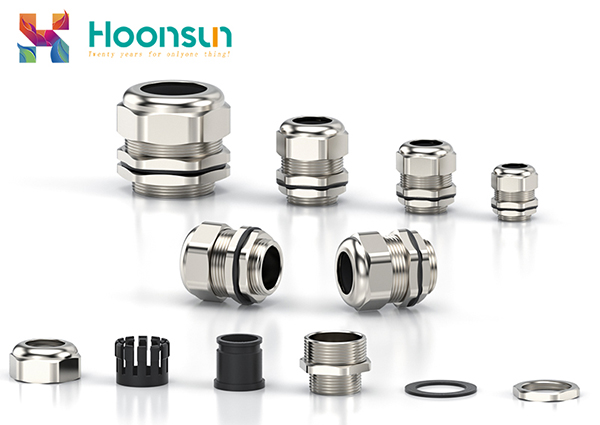
What Are PG-Series Cable Glands?
PG series cable glands are commonly used cable entry assemblies in industrial electrical installations. They are designed to provide a secure, sealed connection between the cable and the equipment housing.
In practical applications, PG cable glands can be used to:
- Secure cables to housings such as control panels, junction boxes, and motor housings
- Protect cable entry points from dust, moisture, and corrosive environments (many designs meet IP68 protection standards)
- Reduce mechanical stress caused by tension or vibration, helping to prevent damage to internal conductors
- Comply with widely recognized compliance standards, including UL, CE, and RoHS
Unlike metric (M series) cable glands, PG connectors are sized based on thread diameter and pitch, not millimeters. This sizing system has made the PG series a long-standing standard in European electrical installations and is widely used in the global industrial market.
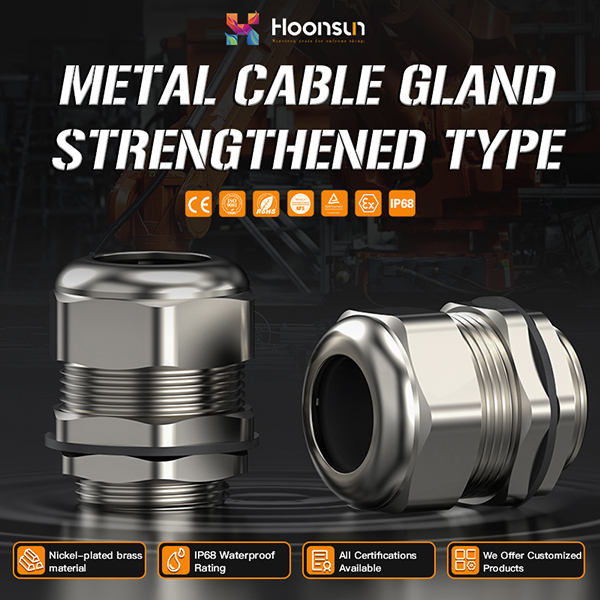
What Are PG 7, PG 13.5 and PG 63 Cable Glands?
PG cable glands are widely used in industrial control panels, junction boxes, and electrical equipment where reliable sealing and stress relief are required.
The main differences between PG 7, PG 13.5, and PG 63 are their sizes and cable load capacities. PG 7 is typically used for small-diameter signal or control cables, PG 13.5 covers a wide range of standard industrial cabling, while PG 63 is designed for large, heavy-duty power cables. These three sizes of cable glands cover virtually all applications in industrial environments.
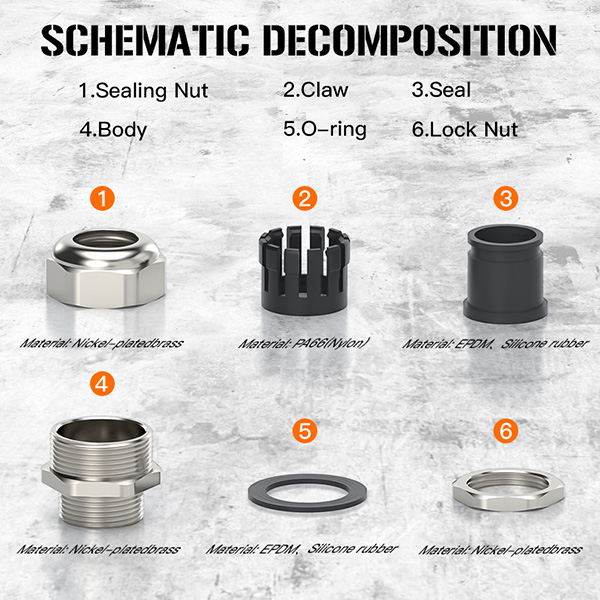
| Parameter | PG 7 | PG 13.5 | PG 63 |
| Thread Outside Diameter | 12.5 mm | 20.4 mm | 57.3 mm |
| Cable Diameter Range | 3–7 mm | 6–12 mm | 38–54 mm |
| Wrench Size | 16 / 18 mm | 24 / 27 mm | 85 / 95 mm |
| Typical Material | Nylon PA66 + Nitrile Rubber (NBR) | Brass + EPDM Rubber | 304 Stainless Steel |
| Operating Temperature | −40°C to 100°C | −30°C to 100°C | −40°C to 120°C (industrial grade) |
| Ingress Protection Rating | IP68 (up to 10 m submersion) | IP68 with EMC shielding | IP68, salt spray resistant |
| Key Certifications | UL 94 V-2 flame retardant | RoHS, CE | ISO 9001 |
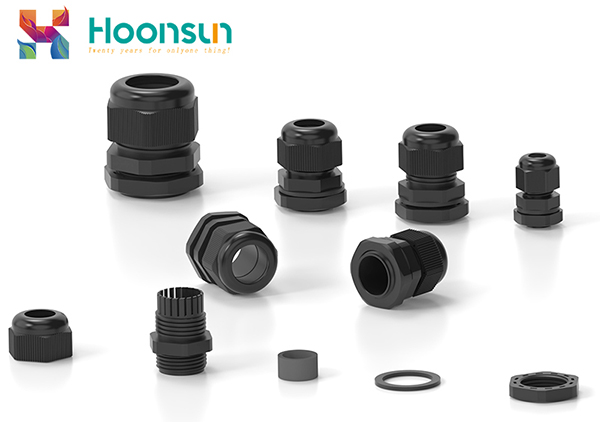
Where Are PG-Series Cable Glands Typically Used?
PG-series cable glands are widely used across industrial environments where secure cable entry, environmental sealing, and mechanical protection are required. Different PG sizes are suited to different cable diameters and operating conditions. The following examples show how PG 7, PG 13.5, and PG 63 are commonly applied in real-world installations.
PG 7 Application: Compact Sensors in Food Processing
In a food processing facility, PG 7 cable glands are used to seal temperature sensor cables installed along a conveyor system. Their compact form factor fits easily into the limited space of sensor housings, while the IP68 sealing protects against moisture, washdown water, and cleaning chemicals commonly used in food-grade environments.
PG 13.5 Application: Inverter Connections in Solar Installations
A utility-scale solar power plant uses PG 13.5 nylon cable glands for inverter connections within electrical panels. The EPDM sealing grommets maintain reliable performance across wide temperature swings, and the gland design allows for fast, tool-free installation, helping reduce panel assembly time on site.
PG 63 Application: Heavy-Duty Power Cables in Wind Turbines
In wind turbine manufacturing, stainless steel PG 63 cable glands are selected for connecting generator power cables. The metal housing provides strong resistance to salt spray and harsh outdoor conditions, while the large clamping range accommodates high-capacity power cables up to 50 mm in diameter, ensuring long-term reliability in offshore and coastal installations.
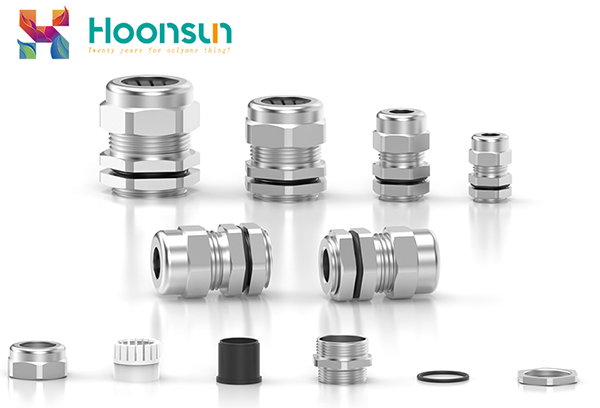
How to Choose the Right Cable Gland?
Selecting the correct cable gland is not just a sizing exercise. Mismatched dimensions, improper materials, or overlooked temperature limits can quickly lead to seal failure, cable damage, and costly downtime. Below are three common mistakes seen in industrial installations and how to avoid them.
Overlooking Cable Diameter Compatibility
Common Mistake
Using a PG 13.5 cable gland for a 5 mm cable, which results in a loose seal, or forcing a PG 7 gland onto a 9 mm cable, creating excessive compression.
What Happens
Poor sealing often leads to moisture ingress, while excessive clamping pressure can damage the cable jacket. In many cases, leaks or insulation failures appear within a few months of installation.
Best Practice
Always select the gland based on the actual outer cable diameter, not the conductor size. For example, PG 13.5 is typically suitable for cables in the 6–12 mm range. Choose PG 7 for smaller cables and move up to larger PG sizes when the cable diameter increases.
Selecting the Wrong Material for the Environment
Common Mistake
Installing nylon (PA66) PG 63 cable glands in coastal wind turbine applications where salt spray and high humidity are present.
What Happens
Nylon housings degrade more quickly in corrosive environments, leading to cracked glands, compromised seals, and unplanned maintenance. In severe cases, motor repairs can exceed $8,000.
Best Practice
Match the gland material to the operating environment:
- Nylon (PA66): Dry, indoor locations such as control cabinets
- Brass: Industrial settings with moderate moisture or chemical exposure
- 304 stainless steel: Harsh conditions including offshore, coastal, or chemical processing environments
Ignoring Temperature Limits
Common Mistake
Using a standard PG 13.5 cable gland in a boiler room where ambient temperatures reach 120°C.
What Happens
Sealing inserts soften or deform at elevated temperatures, increasing the risk of electrical shorts and loss of ingress protection.
Best Practice
Check both static and dynamic temperature ratings before installation. While many cable glands are rated for −40°C to 100°C under static conditions, their dynamic rating, when the cable is moving, may be limited to −20°C to 80°C. Always verify the rating against real operating conditions.
PG vs. Metric Cable Glands
Across Europe and other international markets, there has been a steady shift from traditional PG-thread cable glands to metric (M-series) glands. In many cases, metric sizes are now used as functional replacements, such as M12 for PG 7, M20 for PG 13.5, and M63 for PG 63. The two systems, however, differ in sizing logic, standards, and typical use cases.
| Feature | PG Series | Metric (M Series) |
| Installed Base | Widely used in legacy and German-made equipment | Increasingly common in new installations |
| Standards | Legacy DIN standards | IEC 62444 |
| Sizing Method | PG number does not directly indicate thread diameter | Thread size matches nominal diameter (e.g., M20 = 20 mm) |
| Ease of Selection | Requires reference to sizing charts | More intuitive and easier to specify |
| Cost Considerations | Often lower for nylon glands | Comparable for brass and stainless steel |
Conclusion
PG 7, PG 13.5, and PG 63 cable glands each serve distinct roles in industrial cable management. Selecting the right size and material, based on cable diameter, installation conditions, and environmental exposure helps ensure a secure seal and long-term performance.
If you’re looking for custom PG cable glands or fittings, our engineering team can help with selection and customisation. Free samples are available, and we offer worldwide shipping with typical lead times of up to seven days.
How Can We Help You?
Our professional team is ready to provide you with prompt and support.

As a trusted cable gland supplier, our connector products serve international markets, including new energy, rail transportation, outdoor lighting, robotics and automation, industrial electrical cable equipment, and computer superservers.
© Copyright 2026 ZHEJIANG HONGXIANG CONNECTOR CO., LTD .