

blog
Why Torque Testing Matters for Industrial Metal Cable Glands?


Every industrial installation engineer understands that cable gland failure can lead to costly unplanned shutdowns, electrical safety hazards, and rising long-term maintenance costs. However, when sourcing metal cable glands, many procurement teams focus primarily on material and thread size while overlooking a critical factor before large-scale field deployment: installation torque performance testing.
The torque performance test simulates real-world on-site tightening conditions in a controlled laboratory environment. It verifies whether a brass cable gland can securely grip the cable’s outer sheath without crushing the insulation or damaging the internal conductors.
This standardized testing procedure closely replicates the complete on-site installation process, including cable preparation and assembly, securing the cable gland in a vice fixture, calibrating the torque wrench to zero, and performing the final controlled tightening operation.
1. High-Risk Industrial Applications and the Consequences of Torque Failure
In high-risk industrial environments, torque resistance is far more than just another technical specification on a datasheet. Applications such as offshore platforms, petrochemical processing facilities, utility-scale solar and wind power installations, and outdoor high-voltage distribution cabinets are continuously exposed to mechanical vibration, extreme temperature fluctuations, and sustained cable pulling forces.
If a metal cable gland cannot withstand the specified installation torque, it may gradually loosen under repeated vibration and mechanical stress. Once this happens, the integrity of the IP-rated seal can be compromised, allowing moisture, salt, dust, and corrosive contaminants to enter the electrical enclosure. Over time, this can increase the risk of insulation degradation, electrical faults, equipment failure, and unplanned downtime.
The consequences can be especially costly in offshore applications. Replacing a single failed cable gland may require vessel mobilization, specialized maintenance personnel, and significant operational downtime. As a result, the total cost of repairing a cable gland failure can be dozens of times higher than the cost of the component itself. This is why reliable torque performance is critical when selecting metal cable glands for demanding industrial applications.
2. Why Proper Tightening Torque Is Critical for Reliable Cable Gland Installation
Improper tightening torque is one of the most common hidden causes of wiring system failures in harsh industrial environments.
Excessive torque can permanently deform the compression seal or even damage the gland body.
Torque
Insufficient torque may allow the cable to gradually slip, compromising the gland’s strain-relief performance and long-term connection reliability.
In actual field installations, many electricians tighten cable glands based largely on experience and hand feel. This can result in inconsistent clamping forces across the same project. Some cable glands may be overtightened, causing unnecessary stress or component damage, while others may remain too loose to withstand continuous vibration, cable movement, and other mechanical loads.
Standardized torque testing helps eliminate this uncertainty by establishing a clear and repeatable tightening reference for each cable gland model. It enables installers to achieve consistent clamping performance across different installation teams and helps reduce the risk of human error during field assembly.
For this reason, formal torque performance testing has become an essential quality-control checkpoint before metal cable glands are approved for delivery and deployment in demanding industrial applications.
3. Factory Standard Torque Test Procedure and Multi-Dimensional Inspection
Reliable cable gland manufacturers conduct standardized torque tests under controlled conditions in their in-house quality control facilities.
The process begins by inserting a prepared cable sample into the metal cable gland assembly, ensuring that the cable sheath is correctly positioned within the compression area.
The fully assembled cable gland is then securely clamped in a heavy-duty bench vice. This setup simulates the rigid mounting conditions of a metal equipment enclosure while preventing unwanted movement that could affect the accuracy of the test.
Before each test, technicians reset the calibrated digital torque wrench to zero to minimize residual reading errors and ensure accurate torque measurement.
Controlled torque is then applied steadily and at a consistent rate until the specified tightening value for the cable gland is reached.
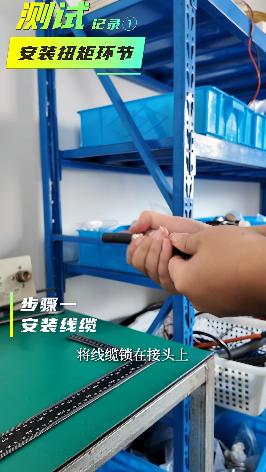

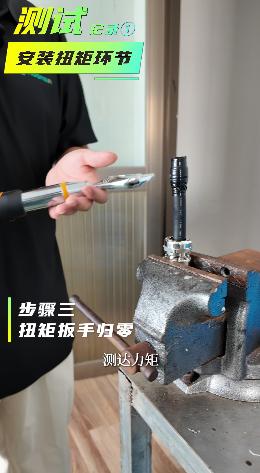
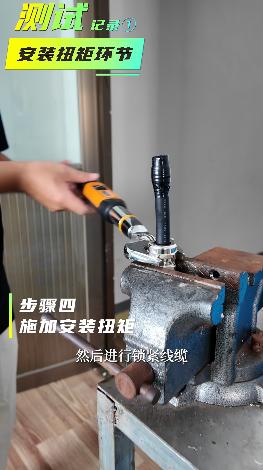
Once the torque-loading cycle is complete, quality inspectors perform a series of checks to evaluate the condition and performance of both the cable gland and the cable.
✓
The gland body is inspected for permanent deformation, thread damage, cracks, or displacement of the compression components.
✓
The cable outer sheath is also examined for cuts, excessive indentations, or insulation damage caused by uneven or excessive compression.
For comprehensive product validation, additional pull-out force testing and IP sealing verification may be performed after torque loading. These tests help confirm that the metal cable gland maintains its required strain-relief, cable retention, and sealing performance after installation torque has been applied.
Successfully completing the full testing and inspection process demonstrates that the cable gland can withstand the specified installation torque without compromising its mechanical integrity, cable retention, or sealing performance. It also provides greater confidence in the gland’s ability to remain reliable under long-term vibration, cable movement, and other mechanical stresses encountered in demanding industrial environments.
For procurement teams sourcing cable entry solutions for offshore, petrochemical, industrial automation, and other harsh-environment applications, reviewing a supplier’s torque testing procedures and validation standards should therefore be an important part of the qualification process.
FAQ
Q1: What is installation torque test for metal cable glands?
A: It is a laboratory performance test that applies controlled tightening force via calibrated torque wrench, to verify the gland’s cable-gripping capacity, mechanical durability and sealing integrity after installation.
Q2: Do all industrial metal cable glands require torque testing?
A: Glands deployed in vibration-prone, outdoor and marine environments are strongly recommended to complete torque performance validation before on-site installation.
Q3: Can I skip torque testing and directly install metal cable glands?
A: Skipping pre-test inspection raises long-term risks of over-tightening damage, cable slippage or lost sealing performance after months of vibrating operation.
Conclusion
Torque performance testing is a critical quality and reliability checkpoint for metal cable glands used in demanding industrial applications. By simulating real-world tightening conditions under controlled laboratory settings, manufacturers can verify that each cable gland withstands the specified installation torque while maintaining secure cable retention, mechanical integrity, and sealing performance.
For industrial projects, selecting torque-validated metal cable glands helps reduce installation inconsistencies, minimize the risk of premature gland failure, and improve long-term system reliability. Over the full project lifecycle, this can translate into fewer maintenance interventions, less unplanned downtime, and a lower total cost of ownership.
For procurement teams and engineers, torque performance should therefore be considered alongside material, thread type, IP rating, cable range, and other key specifications when evaluating metal cable glands for offshore, petrochemical, renewable energy, industrial automation, and other harsh-environment applications.
If you need detailed torque test reports, product dimension tables, or metal cable gland samples for project evaluation, simply send us your cable specifications, installation environment, and required performance parameters. Our technical team can help identify the most suitable cable gland model for your application and provide the relevant technical documentation for further evaluation.
How Can We Help You?
Our professional team is ready to provide you with prompt and support.

As a trusted cable gland supplier, our connector products serve international markets, including new energy, rail transportation, outdoor lighting, robotics and automation, industrial electrical cable equipment, and computer superservers.
© Copyright 2026 ZHEJIANG HONGXIANG CONNECTOR CO., LTD .