
Request A Quote

Cable Gland Parts: Components, Functions, and Selection Guide

Author    |    hongxiang_admin    |    May 21, 2026
facebook sharing button
twitter sharing button
line sharing button
wechat sharing button
linkedin sharing button
pinterest sharing button
whatsapp sharing button
telegram sharing button

Cable glands are known by many names, including cable connectors, cable fittings, cable accessories, and cable entry devices. Regardless of the terminology, they serve one essential purpose: securing and sealing cables within equipment enclosures. This function is critical for protecting sensitive wiring from contaminants, moisture, and corrosion, especially in harsh operating environments.

Although cable glands feature a relatively simple design, they provide a highly reliable system for cable fixation and protection. Their individual components work together seamlessly to create a secure seal around the cable, helping critical systems maintain stable performance even under challenging environmental conditions such as wind, rain, and moisture exposure.

In the following sections, we will take a closer look at the individual components of cable glands, explaining how each part contributes to building a durable and highly effective cable protection system.

Key Parts of a Cable Gland

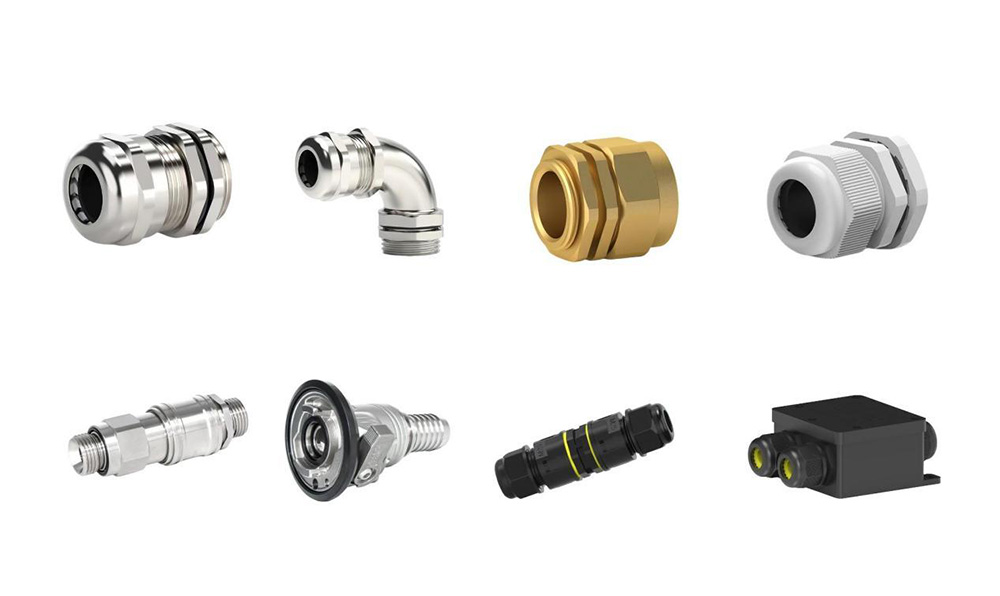
Cable glands are available in different designs to suit various cable types and installation environments. At Hoonsun Cable Gland, common options include metal cable glands, nylon cable glands, armored cable glands, marine cable glands, EMC cable glands, and explosion-proof cable glands. Although the structure may vary slightly depending on the product type, most standard cable glands are built around several key components:
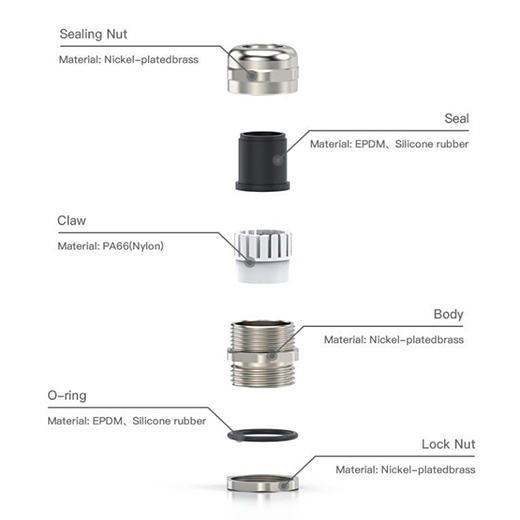
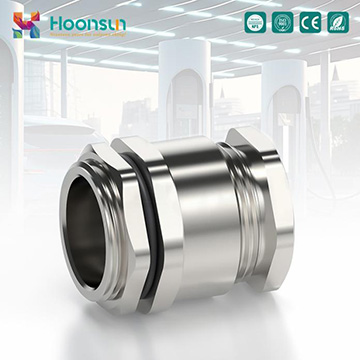
  1. Sealing nut
  2. Washer
  3. Lock nut
  4. Gland body
  5. Seal

These parts work together to secure the cable, maintain sealing performance, and protect electrical systems from dust, moisture, vibration, and external stress. A clear cable gland parts diagram can help engineers, installers, and buyers identify each component more easily during selection, installation, and maintenance.

Key Parts of a Cable Gland

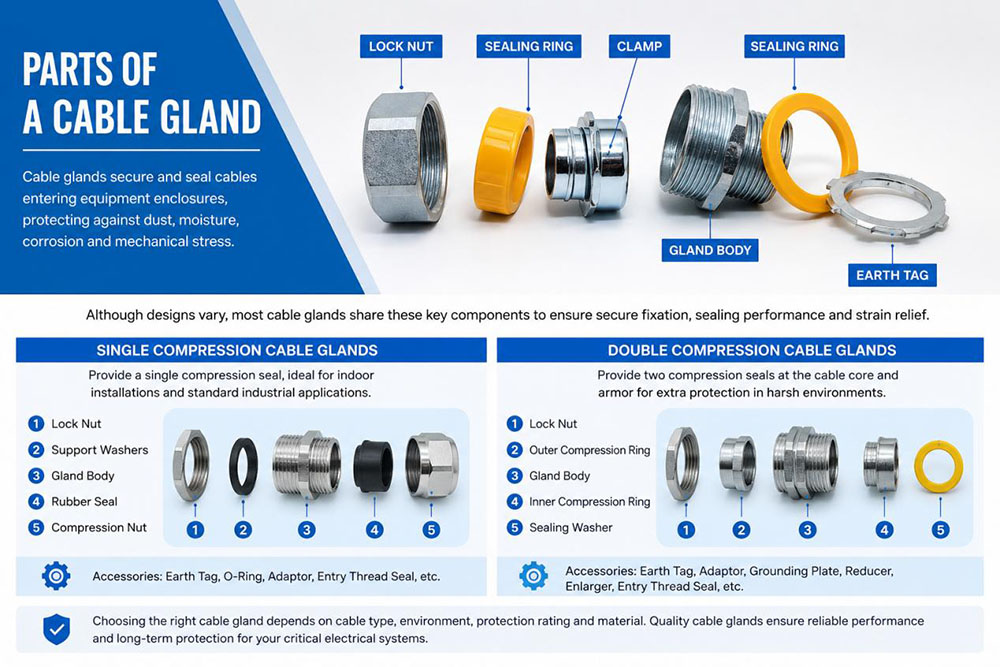
Single Compression Cable Glands

Single compression cable glands create one compression seal around the cable. This seal helps prevent dust, contaminants, and moisture from entering the equipment enclosure while keeping the cable firmly in place. They are commonly used in indoor installations, control panels, automation systems, and smaller electrical projects where standard environmental protection is required.

A typical single compression cable gland usually includes the following parts:

  • Lock nut
  • Support washers
  • Gland body
  • Rubber seal
  • Compression nut

Depending on the installation requirements, single compression cable glands may also be used with accessories such as an earth tag, O-ring, adaptor, or entry thread seal. The exact name of each component may vary by manufacturer, but the function remains the same: to provide reliable cable fixing, sealing, and strain relief.

Single Compression Cable Glands

Depending on the installation requirements, single compression cable glands may also be used with accessories such as an earth tag, O-ring, adaptor, or entry thread seal. The exact name of each component may vary by manufacturer, but the function remains the same: to provide reliable cable fixing, sealing, and strain relief.

Double Compression Cable Glands

Double compression cable glands provide enhanced protection by applying compression at two points: around the cable core and around the armor or outer sheath. This structure offers stronger sealing performance, better cable retention, and improved resistance to vibration, moisture, and mechanical stress.

They are widely used in demanding industrial environments, including power plants, factories, marine applications, outdoor facilities, oil and gas projects, and hazardous areas. For applications requiring higher durability, Hoonsun Cable Gland offers armored cable glands, double seal armoured cable glands, marine cable glands, and explosion-proof cable clamp sealing joints designed for harsh operating conditions.

Double Compression Cable Glands

A typical double compression cable gland generally includes:

  • Lock nut
  • Outer compression ring
  • Gland body
  • Inner compression ring
  • Sealing washer

Like single compression cable glands, double compression cable glands can also be used with accessories such as an earth tag, adaptor, grounding plate, reducer, enlarger, or entry thread seal when required.

For industrial buyers, choosing between single compression and double compression cable glands depends on the cable type, installation location, protection rating, material requirement, and operating environment. Hoonsun Cable Gland provides a broad range of cable gland solutions in brass, stainless steel, nylon, and other materials to support reliable cable protection across electrical, automation, marine, renewable energy, rail transit, telecommunications, and industrial applications.

CABLE GLAND

Functions of the Parts of a Cable Gland

Although cable gland designs vary depending on the cable type and application, most industrial cable glands include several core components.

1. Gland Body

The gland body forms the main housing of the cable gland. It connects directly to the equipment enclosure and contains the internal sealing and compression components. The gland body is typically manufactured from brass, stainless steel, aluminum, or nylon, depending on the environmental and mechanical requirements.

The gland body provides:

  • Mechanical support
  • Threaded enclosure connection
  • Structural stability
  • Internal component alignment

Industrial cable glands commonly use metric, PG, or NPT thread standards to match different equipment designs.

2. Entry Thread

The entry thread is the threaded section that secures the gland to the enclosure wall.

Different thread standards are used globally, including:

Metric threads

PG threads

NPT threads

Selecting the correct thread type is essential for proper sealing and compatibility with the enclosure opening.

3. Lock Nut

The lock nut fastens the gland body securely to the enclosure or gland plate. It prevents loosening caused by vibration or mechanical movement.

In high-vibration industrial environments, lock nuts play an important role in maintaining stable cable connections.

4. Compression Nut

The compression nut is tightened during installation to compress the sealing system around the cable sheath. This creates a secure environmental seal and also provides strain relief to prevent cable movement.

Proper tightening torque is important because insufficient compression may reduce sealing performance, while excessive force can damage the cable sheath.

5. Sealing Ring or Elastomer Seal

The sealing ring is typically manufactured from elastomeric materials such as rubber, silicone, or neoprene. It prevents the ingress of:

  • Water
  • Dust
  • Oil
  • Chemicals
  • Moisture

High-quality sealing materials improve resistance to UV exposure, corrosion, and temperature fluctuations.

6. Clamping Ring or Compression Cone

In armored cable glands, the clamping ring or armor cone grips the cable armor securely.

This component improves cable retention and provides additional mechanical protection under vibration or pulling stress.

Double compression glands usually include more advanced clamping systems for improved sealing performance.

7. Earth Tag and Grounding Components

Certain cable glands include grounding accessories such as earth tags or grounding rings. These components ensure electrical continuity between armored cables and metal enclosures, which is especially important in hazardous industrial installations.

8. Washer or Sealing Washer

Washers are used between the gland and enclosure surface to improve sealing performance and protect the enclosure finish. In outdoor or washdown environments, sealing washers help maintain higher IP protection ratings.

How Do Different Types of Cable Glands Work?

How Do Different Types of Cable Glands Work

Cable glands are designed to secure cables in place, protect them from external environmental hazards, and provide strain relief against tension and mechanical stress. By using cable glands, you can greatly reduce the risk of hazardous accidents.

Each type of cable gland has slightly different characteristics, making it suitable for a wide range of applications.

Armored Cable Glands

Armored cable glands are specifically designed for cables used in particularly harsh environments. These glands include an armored layer, typically made of steel mesh, to help protect the cable from physical damage. They are also commonly used in wall-mounted wiring and underground installation projects. Compared with standard cable glands, armored cable glands are generally larger in size. When selecting this type of gland, it is important to ensure that its dimensions match the cable precisely.

The names of the various components of armored cable glands are generally the same as those used for other cable gland types. However, one distinctive feature of armored cable glands is the inclusion of an “armoring clamping cone,” which is used to securely fasten the cable’s armored layer.

Metal Cable Glands

Metal cable glands are manufactured from metallic materials such as aluminum, stainless steel, and brass. Each material offers its own advantages. For example, stainless steel provides excellent corrosion resistance; aluminum is an efficient thermal and electrical conductor; and brass offers strong resistance to deformation under both high- and low-temperature conditions.

Rubber Cable Glands

Rubber cable glands use seals made from synthetic rubber to create a tight, watertight seal. For example, the O-rings in these glands are usually made from neoprene, while the gaskets are commonly produced from chloroprene rubber.

Waterproof Cable Glands

Waterproof cable glands are designed with specialized water-resistant properties, typically allowing them to remain submerged in water at depths of around one meter without performance failure. The Ingress Protection (IP) rating defines the level of protection a material provides against water and other contaminants. For example, an IP68 rating indicates complete protection against dust ingress, as well as reliable resistance to high-pressure and high-temperature water jets.

Important Factors When Selecting a Cable Gland

Selecting the correct cable gland requires evaluating several technical factors.

Cable Type

Determine whether the cable is:

  • Armored
  • Unarmored
  • Flexible
  • Shielded
  • Multi-core

Environmental Conditions

Consider exposure to:

  • Water
  • Dust
  • Chemicals
  • UV radiation
  • Extreme temperatures
  • Vibration

Ingress Protection Rating

Choose glands with appropriate IP ratings such as:

  • IP66
  • IP67
  • IP68
  • IP69K

Higher ratings provide improved protection against water and dust ingress.

Hazardous Area Requirements

For explosive environments, select glands certified to:

  • ATEX
  • IECEx
  • UL
  • CSA

Material Compatibility

The gland material should be compatible with both the cable type and enclosure material to avoid galvanic corrosion or mechanical failure.

Get High-Quality Cable Glands From Hoonsun Cable Gland

Cable glands are essential components in industrial electrical systems. Their role goes far beyond simple cable entry and connection. By offering a combination of functions(including sealing, strain relief, grounding, and environmental protection) cable glands are crucial for maintaining operational safety and ensuring the long-term stability of electrical systems.

When selecting cable glands, we make it easy to choose the right materials and styles to match your specific requirements. You can also specify temperature parameters to ensure the selected products are perfectly suited to your application. Our solutions cater to a wide range of industries, including robotics, HVAC, and healthcare.

We encourage you to explore our website to browse our comprehensive selection of cable glands, or contact us today to begin the process of selecting the ideal solution for your needs.

How Can We Help You?

Our professional team is ready to provide you with prompt and support.

logo

As a trusted cable gland supplier, our connector products serve international markets, including new energy, rail transportation, outdoor lighting, robotics and automation, industrial electrical cable equipment, and computer superservers.

© Copyright 2026 ZHEJIANG HONGXIANG CONNECTOR CO., LTD .

+86-577-62628623